2027 MotoGP 850cc Prototypes Hit Jerez: Espargaró Paces Wet KTM RC16 Test
153 kg & 850cc + 75mm bore limit and trimmed winglets + Pol Espargaró gives KTM's post-liter-bike prototype its first wet track shakedown at Jerez.


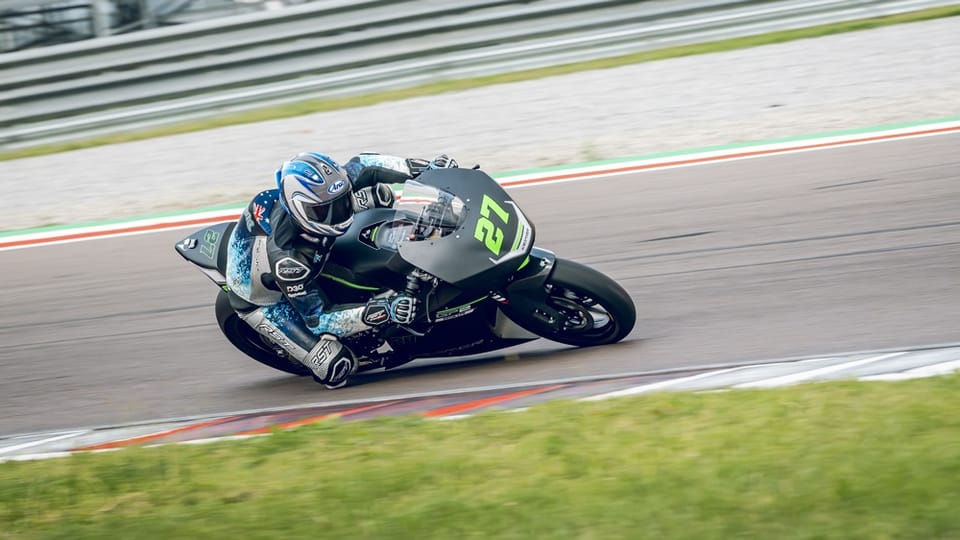
If you have watched modern MotoGP prototypes blast down the front straight at Mugello or Qatar at 366 km/h, your eyes and your ears have grown accustomed to a brutal display of aerodynamic turbulence and four-digit displacement. But behind locked pit garage doors in Andalusia, the future arrived with a distinctly tighter footprint. At the Circuito de Jerez-Ángel Nieto, factory test rider Pol Espargaró rolled out KTM’s prototype 2027 KTM RC16 850cc machine for its first head-to-head private test running in mixed weather conditions.
Between sudden Atlantic rain squalls and greasy drying asphalt, Espargaró paced the opening day of running, clocking benchmark times that immediately validated Mattighofen’s downsized engine architecture against early developmental mules from Ducati and Aprilia. It is our first real-world glimpse of how grand prix racing intends to survive the aerodynamic arms race.
Downsized Displacement and Narrowed Aerodynamics on Track
The prototype 2027 KTM RC16 850cc features an engine bore reduced from 81 mm to 75 mm, dropping total displacement from 1,000cc to 850cc under the incoming FIM technical regulations. Maximum power is estimated to fall from roughly 295 hp down to approximately 255 hp, while minimum dry vehicle mass has been trimmed by 4 kg to 153 kg.
On track at Jerez, the visual transformation of the prototype 2027 KTM RC16 850cc is striking. The front fairing width has been carved back by 50 mm, and the expansive front aerodynamic downforce winglets that defined the liter-bike era have been trimmed to slender, low-drag carbon planes. More importantly, both front and rear ride-height devices and holeshot gadgets have been completely eliminated from the chassis. Watching Espargaró transition through the fast Curva Sito Pons right-hander, the motorcycle exhibited none of the squatting, hydraulic-locked composure of the current machine. Instead, the chassis pitch is natural, mechanical, and visibly looser.
“The first sensation when you open the throttle on the 850cc is how much faster the crankshaft spins up, but also how much more corner speed you have to carry,” noted an engineer close to the test paddock. “Without ride-height devices pinning the swingarm, the rear tire actually talks to the rider again over corner exit ripples.”
The Rider’s Trade-Off: High-RPM Screamer vs Low-End Drive
The engineering trade-off of the 2027 regulation reset lies in the loss of explosive bottom-end grunt off slow apexes. By restricting maximum cylinder bore to 75 mm and prohibiting non-round pistons, the FIM has forced engine designers to lengthen stroke or spin the valvetrain substantially harder to extract top-end kilowatt output.
On greasy asphalt at Jerez, the prototype 2027 KTM RC16 850cc was noticeably friendlier on initial throttle opening than the violent 1,000cc engine that propelled Pedro Acosta’s premier-class breakthrough aboard the KTM RC16. However, off slow hairpin turns like Dry Sack, riders can no longer rely on instantaneous 1,000cc torque to cover up small cornering line errors. Momentum and corner entry trajectory—traits that rewarded Marco Bezzecchi’s dominant Qatar GP performance—will now dictate lap time rather than straight-line drag launches.
| Technical Parameter | Prototype 2027 KTM RC16 850cc | Current 2026 KTM RC16 (1,000cc) | Superbike Benchmark (Production) |
|---|---|---|---|
| Engine Displacement | 849cc V4 (est.) | 999cc 90° V4 | 998cc Inline-Four / V4 |
| Maximum Cylinder Bore | 75.0 mm (Mandatory) | 81.0 mm | 81.0 mm |
| Peak Power Output | ~255 hp @ 17,200 rpm (est.) | ~295 hp @ 16,800 rpm | ~218 hp @ 14,500 rpm |
| Minimum Bike Weight | 153 kg | 157 kg | 168 kg (FIM WSBK Spec) |
| Ride-Height Devices | Prohibited (Front & Rear) | Permitted (Mechanical) | Prohibited |
| Fuel Tank Capacity | 20.0 Litres | 22.0 Litres | 24.0 Litres (FIM EWC Spec) |
What We Know / What’s Still Unclear
What We Know: - The 2027 engine rules mandate an 850cc four-cylinder architecture with maximum 75 mm cylinder bore and standard steel valves. - Minimum motorcycle weight drops from 157 kg to 153 kg, and fuel tank capacity is restricted to 20 litres. - Ride-height devices and holeshot shape-shifters are entirely banned for both practice and race sessions. - Maximum fairing width is reduced from 600 mm to 550 mm to diminish dirty aerodynamic wake and enable slipstream overtaking.
What’s Still Unclear: - Whether KTM will retain its signature steel-trellis-and-composite hybrid frame concept or adopt a full carbon twin-spar chassis for 2027. - Final Michelin tire casing constructions designed specifically for the lighter, device-free 850cc generation. - How the GPS and lean-angle data sharing mandated for 2027 will affect private electronic traction control strategies.
Media citation: Editorial outlets and forums may quote excerpts with attribution and a link to Throttle Times.
Reporting via: speedweek.com, crash.net