Kawasaki's 2027 Ninja H2 Is Official, and It Gave Up 22 PS to Come Back From the Dead
Kawasaki said 2026 would be the Ninja H2's last year. It just confirmed a 2027 model instead, 22 PS lighter but very much alive.
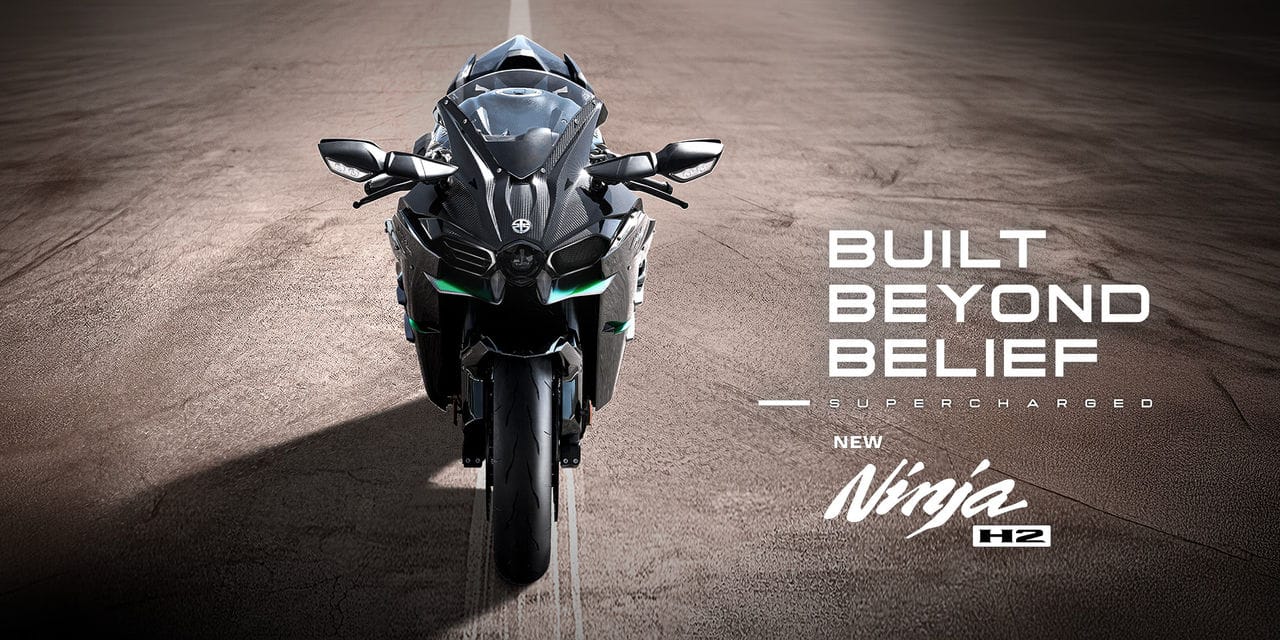
Kawasaki confirmed the 2027 Ninja H2 lineup on its own UK news page this week — and the headline number is that the supercharged inline-four now makes 209 PS (about 206 hp) with Ram Air, down from 231 PS on the outgoing bike, so it can keep meeting Euro 5+ emissions rules. The H2R track weapon stays in triple-digit territory north of 300 hp. I read the press release twice because it genuinely didn’t add up with what Kawasaki told everyone last year — they’d said 2026 was it, last orders, don’t ask again. And now there’s a 2027 model with a price list. I don’t know who blinked internally at Akashi, but I’m glad they did, because a world with fewer superchargers strapped to production motorcycles is a worse one.
Kawasaki quietly un-killed the Ninja H2
Kawasaki had told dealers that the road-going Ninja H2 and H2 Carbon would stop taking new orders after the 2026 model year — officially, permanently, that’s-a-wrap done. The 2027 range that just got confirmed reverses that: standard Ninja H2, H2 Carbon, and the track-only H2R all return, in “very limited numbers” according to Kawasaki’s own announcement, finished in a new Mirror Coated Spark Black.
Nobody at Kawasaki has said in public why the cancellation got cancelled. My money’s on Euro 5+ giving them a legal path to keep selling it that didn’t exist a year ago, but that’s me reading tea leaves, not something in the press release.
The engine gave up 22 PS to stay legal
The 998cc supercharged inline-four — impeller, intake, pistons, cylinder head, cylinder, crankshaft, camshafts, throttle bodies and exhaust are all new for 2027 — now peaks at 209 PS with Ram Air, against 231 PS on the last bike sold. Peak torque now arrives at 8,500 rpm. Kawasaki says the new exhaust’s optimised pipe diameters actually improve low-to-mid-range torque even with the top-end number down, which is the trade every manufacturer chasing Euro 5+ makes right now — you give up the number on the spec sheet that used to sell the bike in a magazine ad, and get back the number that actually matters on a Tuesday commute.
The H2R, which never had to meet road-emissions rules in the first place because it’s sold as a track-only machine, keeps its supercharged output “close to 300 hp” — Kawasaki isn’t publishing an exact figure for it in this release, same as before.
| Spec | Value |
|---|---|
| Engine | Supercharged 998cc inline-four |
| Peak power (H2 / H2 Carbon) | 209 PS (~206 hp) with Ram Air |
| Previous-gen peak power | 231 PS |
| Peak torque delivery | 8,500 rpm |
| Front brakes | Brembo Hypure calipers |
| Front suspension | KYB AOS-II fork |
| Rear suspension | Öhlins TTX36 shock |
| Steering damper | Öhlins, electronic |
| UK price — Ninja H2 | £28,600 (~€33,200) |
| UK price — H2 Carbon | £31,350 (~€36,400) |
| UK price — H2R (track-only) | £52,000 (~€60,300) |
| Availability | End of 2026, “very limited numbers” |
Brakes, suspension and electronics all move up a notch
The front brake calipers switch to Brembo’s Hypure units — lighter and stiffer than what was fitted before — and the front end runs a KYB AOS-II fork with an Öhlins TTX36 shock and an electronic Öhlins steering damper out back. The trellis frame itself is unchanged in concept, tuned for the same stiffness-versus-flex balance Kawasaki has used on the H2 since it launched.
The electronics suite carries Kawasaki’s full alphabet: KCMF (cornering management), a revised KTRC traction control, KLCM launch control, KIBS cornering ABS, the KQS quick shifter, engine brake control and electronic cruise control, plus Rideology app connectivity with a choice of two instrument display layouts. None of that is new to the H2 nameplate, but a bike that was supposedly being discontinued getting a full electronics refresh instead is its own small piece of evidence that this wasn’t a token one-more-year gesture.
Pricing puts it well above where BMW is playing
At £28,600 (roughly €33,200) for the standard Ninja H2, Kawasaki’s supercharged flagship sits in a different bracket entirely from most of what gets called a “hyperbike” — a serious price before you’ve even looked at the £31,350 (~€36,400) Carbon version or the £52,000 (~€60,300) H2R, which you can’t ride on the road at all. It’s less a competitor to anything else on sale and more its own category — supercharger, forced induction, no direct rival on any showroom floor in Europe, which is presumably part of why Kawasaki found a way to keep it alive rather than let the badge disappear entirely. It’s the same logic behind Ducati building a race-only Desmo450 SM it’ll barely sell in volume: a halo model earns its keep by association, not by units moved.
I’d read that as Kawasaki deciding the halo effect is worth more than the volume a bike like this was ever going to move — nobody’s buying an H2 to commute on, the same way nobody buys a Veyron to sit in traffic, but having one in the range makes the rest of the lineup look better by association. Not every manufacturer gets to make that bet from a position of strength right now — MV Agusta is in the opposite spot, fighting for survival rather than deciding whether to keep a halo model alive for the brand image alone.
Kawasaki had already pointed at this outcome via homologation filings and a teaser months before this press release made it official — the power drop and the Europe-return signal were both visible in the paperwork before Kawasaki said a word about it.
When does the 2027 Kawasaki Ninja H2 go on sale?
Kawasaki says arrival is end of 2026, though only in “very limited numbers” — this comes after Kawasaki had previously said the 2026 model year would be the H2’s last.
How much power does the 2027 Ninja H2 make?
209 PS (about 206 hp) with Ram Air for the standard Ninja H2 and H2 Carbon, down from 231 PS on the outgoing model. The track-only H2R stays above 300 hp.
How much does the 2027 Ninja H2 cost?
UK pricing is £28,600 (~€33,200) for the standard Ninja H2, £31,350 (~€36,400) for the H2 Carbon, and £52,000 (~€60,300) for the track-only H2R.
What changed on the 2027 Ninja H2 besides the engine?
Brembo Hypure front brake calipers, a KYB AOS-II front fork, an Öhlins TTX36 rear shock with an electronic Öhlins steering damper, and a full electronics suite (KCMF, KTRC, KLCM, KIBS, KQS, engine brake control, cruise control) with Rideology app connectivity.
Official source: https://www.kawasaki.co.uk/en/news/2026/September/supercharged-ninja-h2-series-returns-for-2027.html
Reporting via: visordown.com, autoevolution.com