Norton Says the Manx R Was Built on 218,000km of Telemetry, Not Just a Lap Time
Norton says the Manx R was shaped by 218,000km of real-world telemetry and 700-plus tests across five countries -- and I'm now doing credit-card math I promised myself I wouldn't.
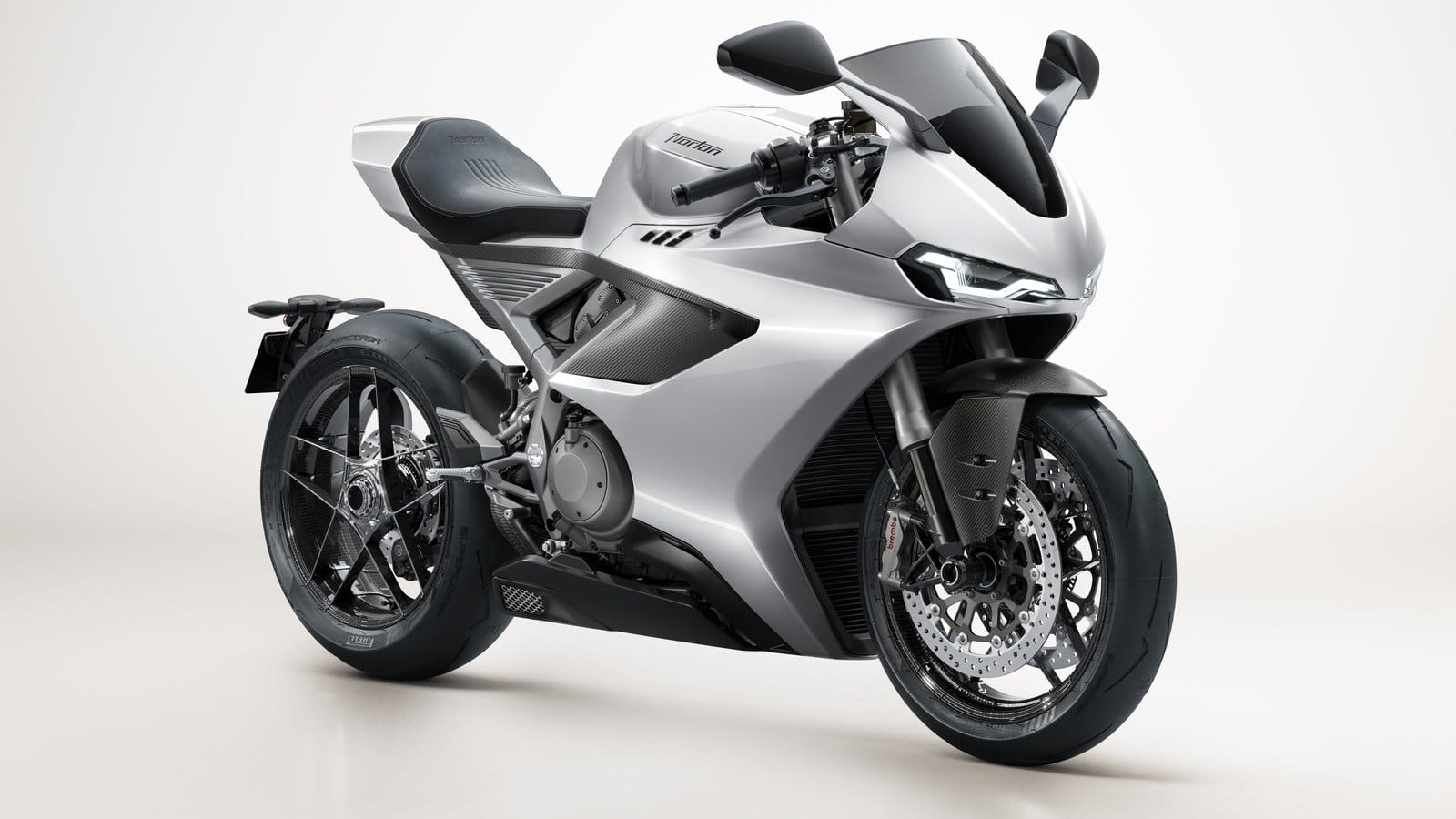
Norton built the new Manx R around 218,000km of real-world telemetry logged off development and rival bikes, not just a lap-time target – a development story the company only just went public with, more than a year after the bike itself launched. The scale of it is what’s notable: over 500,000km of total testing, more than 100 prototypes, and 700-plus individual tests spread across five countries.
Rider feel as an engineering spec, not a vibe
Norton fitted telematics to its own development mules and to rival superbikes, logging 218,000km of real riding to define what “good” should actually feel like before writing a single suspension setting. That’s the headline of the story Norton’s telling now: rider feel got treated as a measurable requirement from day one, the same way power figures or brake torque would be, rather than something tuned in by feel at the very end.
It shows up most in the semi-active suspension fitted to the Apex, Signature and First Edition trims. Sensors track suspension position, speed and acceleration, and an algorithm updates front and rear damping independently every three milliseconds in response to rider input and changing surface. The base Manx R skips all that in favour of manually adjustable Marzocchi units – 45mm USD forks with 120mm of travel up front, a monoshock with 126mm out back – which is either the honest budget trim or the one for someone who’d rather set their own numbers, depending on how you like your Sunday mornings.
What’s actually under the bodywork
The engine is a 72-degree liquid-cooled V4, 1200cc, running 82mm x 56.8mm bore and stroke at a 14:1 compression ratio, fed by multi-point sequential injection through eight injectors. Output is 206 hp (153.6kW) at 11,500rpm and 130 Nm at 9,000rpm, run through a six-speed gearbox with an up/down quickshifter and a cable-operated slip-assist clutch. Claimed fuel consumption is 15.3 L/100km, out of a 14.5-litre tank – so don’t plan a range further than you’d trust your own patience for a fuel stop.
| Spec | Value |
|---|---|
| Engine | 1200cc 72° liquid-cooled V4 |
| Power | 206 hp (153.6kW) @ 11,500rpm |
| Torque | 130 Nm @ 9,000rpm |
| Wet weight | 210kg (no fuel) |
| Fuel capacity | 14.5 L |
| Frame | Die-cast aluminium, single-sided swingarm |
| Front suspension (base) | 45mm USD Marzocchi, 120mm travel, manual |
| Front suspension (Signature+) | Marzocchi semi-active, 3ms update rate |
| Brakes | Brembo Hypure, cornering ABS EVO |
| Base price | €23,250 |
| Signature Edition price | €43,750 |
A Bosch 10.3ME six-axis IMU feeds five ride modes – Rain, Road, Sport, Track 1, Track 2 – and an 8-inch TFT dash with GoPro integration and Norton’s own app connectivity rounds out the electronics package. Brakes are Brembo Hypure calipers with cornering ABS EVO, biting on 17-inch cast wheels (carbon optional on the Signature) wrapped in Pirelli Diablo Supercorsa SP-V4 rubber.
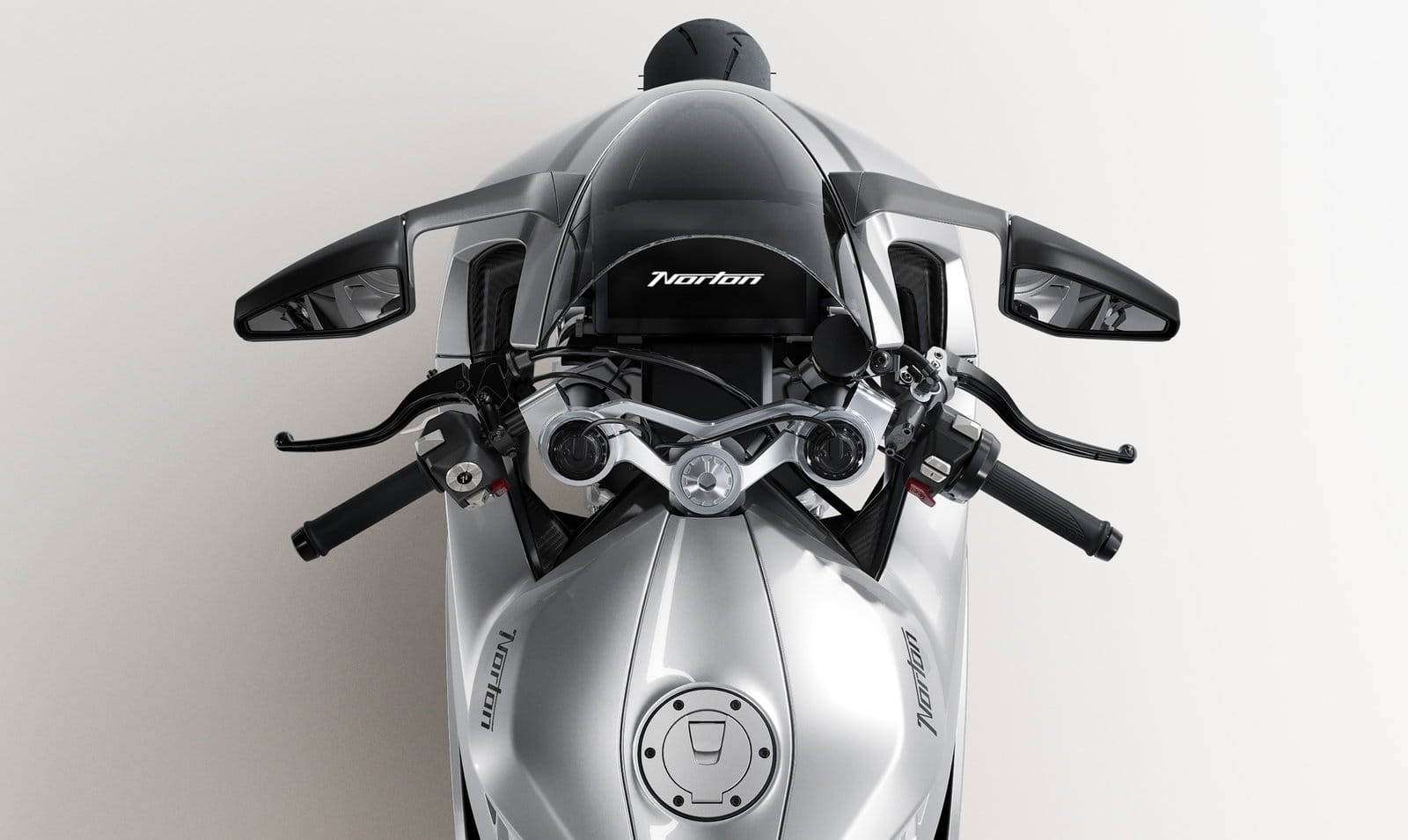
I’ve spent more time than I’d like to admit doing the mental math on a Signature Edition versus what a used car costs in my garage’s price range, and every single time the bike wins the argument I’m not actually having with my wife yet. €43,750 for carbon wheels and suspension that thinks faster than I do is either obscene or completely reasonable, and I genuinely can’t tell you which anymore.
For a company that’s spent the last decade better known for financial trouble than for engineering rigour, a story built entirely around 218,000km of telemetry and five countries of testing reads like Norton actively trying to change the conversation about whether the brand can be trusted to build the next bike, not just this one. It’s the kind of R&D-first messaging you’d expect right after Ducati talked up its own EUR121M engineering push – everyone in this segment is suddenly very keen to be seen as an engineering company first. Triumph’s telling a similar story with its own halo bike, the factory-custom Speed Twin 1200 TFC, even if the engineering pitch there is heritage rather than telemetry.
FAQ
What engine does the Norton Manx R use?
A 1200cc, 72-degree liquid-cooled V4 making 206 hp (153.6kW) at 11,500rpm and 130 Nm at 9,000rpm.
How much does the Norton Manx R cost?
The base model starts at €23,250. The Signature Edition, with carbon wheels and semi-active Marzocchi suspension, is €43,750.
What’s different about the Manx R’s suspension across trims?
The base bike uses manually adjustable Marzocchi suspension. The Apex, Signature and First Edition trims get semi-active Marzocchi suspension that updates front and rear damping independently every three milliseconds.
How much testing went into developing the Manx R?
Norton says over 500,000km of total testing, more than 100 prototypes, 700-plus individual tests across five countries, and 218,000km of telemetry logged specifically to define real-world rider feel.
Official source: https://www.nortonmotorcycles.com/en-gb/model/manx-r