Royal Enfield Unveils the Himalayan 750 at EICMA With a 19-Inch Front Wheel
743cc twin, 54.25 bhp, and a 19-inch front hoop. Royal Enfield finally built the two-cylinder tourer we wanted, even if it traded dirt for asphalt.

Part of Throttle Times’ live coverage of EICMA 2026.
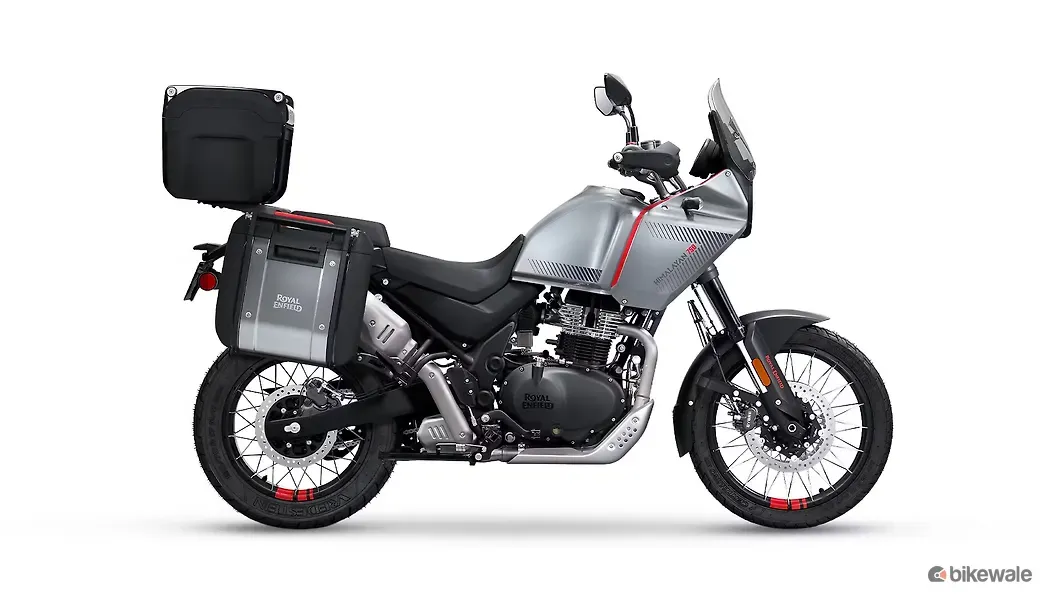
Royal Enfield has officially unveiled the Himalayan 750 at EICMA 2026 in Milan, pulling the cover off its largest and most powerful adventure motorcycle to date. Moving decisively into the middleweight touring class, the Chennai manufacturer has addressed the biggest limitation of the smaller Himalayan 450—its high-speed highway stamina—by dropping in an all-new 743cc parallel-twin engine with a 270-degree firing order, while giving the chassis premium Showa suspension and standard electronic cruise control.
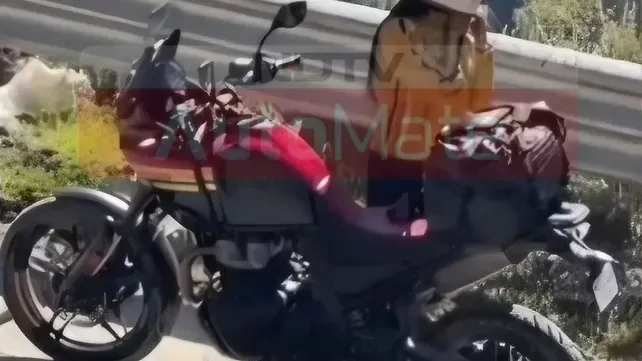
Following months of European road-test sightings where Himalayan 750 spy shots revealed pre-production mules testing in Spain and the UK, the finished machine arrived in Milan wearing five production colorways (Antarctic Silver, Siberia White, Viking Bronze, Tectonic Black, and Aztec Green) and an unmistakable message: Royal Enfield is no longer content selling budget thumper alternatives—it wants a direct slice of the European touring market.
An All-New 743cc Twin Engineered for Low-Stress Distance
The heart of the new machine is a completely fresh 743cc air-and-oil-cooled parallel-twin engine, departing mechanically from both the Sherpa 450 single and the air-cooled 648cc twin found in the Interceptor. Tuned for broad midrange torque rather than high-RPM peak numbers, the DOHC powerplant develops 54.25 bhp (40 kW) at 7,000 rpm and 63 Nm of peak torque at a low 5,000 rpm.
Power transfers through a 6-speed gearbox assisted by a slipper clutch, with electronic ride-by-wire managing throttle response across multiple riding modes. Royal Enfield engineers confirmed that standard electronic cruise control is fitted to every European-bound model—a first for the Himalayan badge. The cockpit features the circular 4-inch full-color TFT display familiar from recent models, but updated with full turn-by-turn Google Maps integration, ambient temperature readouts, and a tire pressure monitoring system (TPMS) as standard equipment.
“The Sherpa 450 conquered the mountains, but our riders spent days riding thousands of highway kilometers just to get to the trailhead,” explained a Royal Enfield development engineer at the Milan stand. “The 750 was built so you can cruise at 130 km/h across the continent with two full aluminium panniers without vibrating your hands numb.”
Showa Adjustable Damping and the Shift to a 19-Inch Front Wheel
Underneath the vintage-styled adventure bodywork sits an all-new steel tubular cradle frame developed in collaboration with Harris Performance. Suspended up front is an adjustable Showa upside-down (USD) fork offering 10 steps of manual preload adjustment via top-cap clickers, paired with a linkage-mounted Showa rear monoshock featuring remote hydraulic preload.
Crucially, Royal Enfield has equipped the Himalayan 750 with a 19-inch front and 17-inch rear wheel combination, abandoning the hardcore 21-inch front hoop found on the 450 and rival concepts like the Ténéré 4 Concept. Wire-spoked variants feature cross-spoke tubeless rims, while entry-level trims utilize cast aluminum alloys. Braking performance takes a massive step forward with twin 300 mm front discs gripped by ByBre axial calipers, governed by a dual-channel ABS system that allows independent rear-wheel deactivation for gravel descents.
The Rider’s Trade-Off: 19-Inch Touring Poise vs 21-Inch Rock Crawling
The trade-off Royal Enfield made with the Himalayan 750 will divide off-road purists. By stepping down to a 19-inch front wheel and adding a heavy twin-cylinder engine, wet weight climbs to an estimated 218 kg. On tarmac sweepers, Alpine passes, and high-speed motorways, the 19-inch hoop provides dramatically sharper front-end turn-in, superior braking stability, and zero of the vague, wandering front-tire float that plagues 21-inch knobbies at 120 km/h.
The penalty arrives the instant the trail turns into wet ruts or jagged rock gardens. A 19-inch front wheel cannot roll over 20-centimeter ledges with the effortless momentum of a 21-inch wheel, and manhandling 218 kg through loose sand requires twice the muscle required by the lightweight Hero Xpulse 421. Royal Enfield has built an exceptional, low-stress overland travel machine, but riders expecting an agile rally weapon will find its weight squarely planted on the road side of the adventure fence.
| Specification | Royal Enfield Himalayan 750 | Royal Enfield Himalayan 450 | Yamaha Ténéré 700 |
|---|---|---|---|
| Engine Layout | 743cc air/oil-cooled parallel-twin | 452cc liquid-cooled single | 689cc liquid-cooled parallel-twin |
| Power Output | 54.25 bhp (40 kW) @ 7,000 rpm | 40 bhp (29.4 kW) @ 8,000 rpm | 73.4 hp (54 kW) @ 9,000 rpm |
| Peak Torque | 63 Nm @ 5,000 rpm | 40 Nm @ 5,500 rpm | 68 Nm @ 6,500 rpm |
| Wheel Sizes | 19-inch front / 17-inch rear | 21-inch front / 17-inch rear | 21-inch front / 18-inch rear |
| Tire Setup | Tubeless cross-spoke or alloy | Tube-type wire spoke | Tube-type wire spoke |
| Suspension | Showa USD (adj. preload) | Showa USD (non-adj.) | KYB USD (fully adj.) |
| Electronics | Cruise control, Ride modes, TPMS | Ride modes | Switchable ABS |
| Estimated Weight | ~218 kg (wet) | 196 kg (wet) | 205 kg (wet) |
| Est. EU Price | ~€6,900 – €7,300 | €5,900 | €11,100 |
What We Know / What’s Still Unclear
What We Know: * Genuine 743cc 270-degree parallel-twin delivering 54.25 bhp and 63 Nm. * 19-inch front / 17-inch rear wheel setup available with factory tubeless cross-spoke rims. * Premium Showa adjustable USD suspension and twin front disc brakes. * Standard electronic cruise control, ride-by-wire, TPMS, and circular TFT with full Google Maps navigation.
What’s Still Unclear: * Exact fuel tank volume: projected at 18 to 20 liters, but official range certification is pending homologation. * European showroom arrival date: European deliveries are expected in early summer 2027 following the Indian commercial launch at Motoverse later this month.
Media citation: Editorial outlets and forums may quote excerpts with attribution and a link to Throttle Times.
Official source: https://www.royalenfield.com/
Reporting via: bikewale.com, paultan.org