Triumph Tracker 400 Spied With Circular TFT Display and Cruise Control
4-inch circular TFT + 4-way navigation cube with ride-by-wire cruise control + Triumph and Bajaj upgrade the 398cc platform for highway miles.

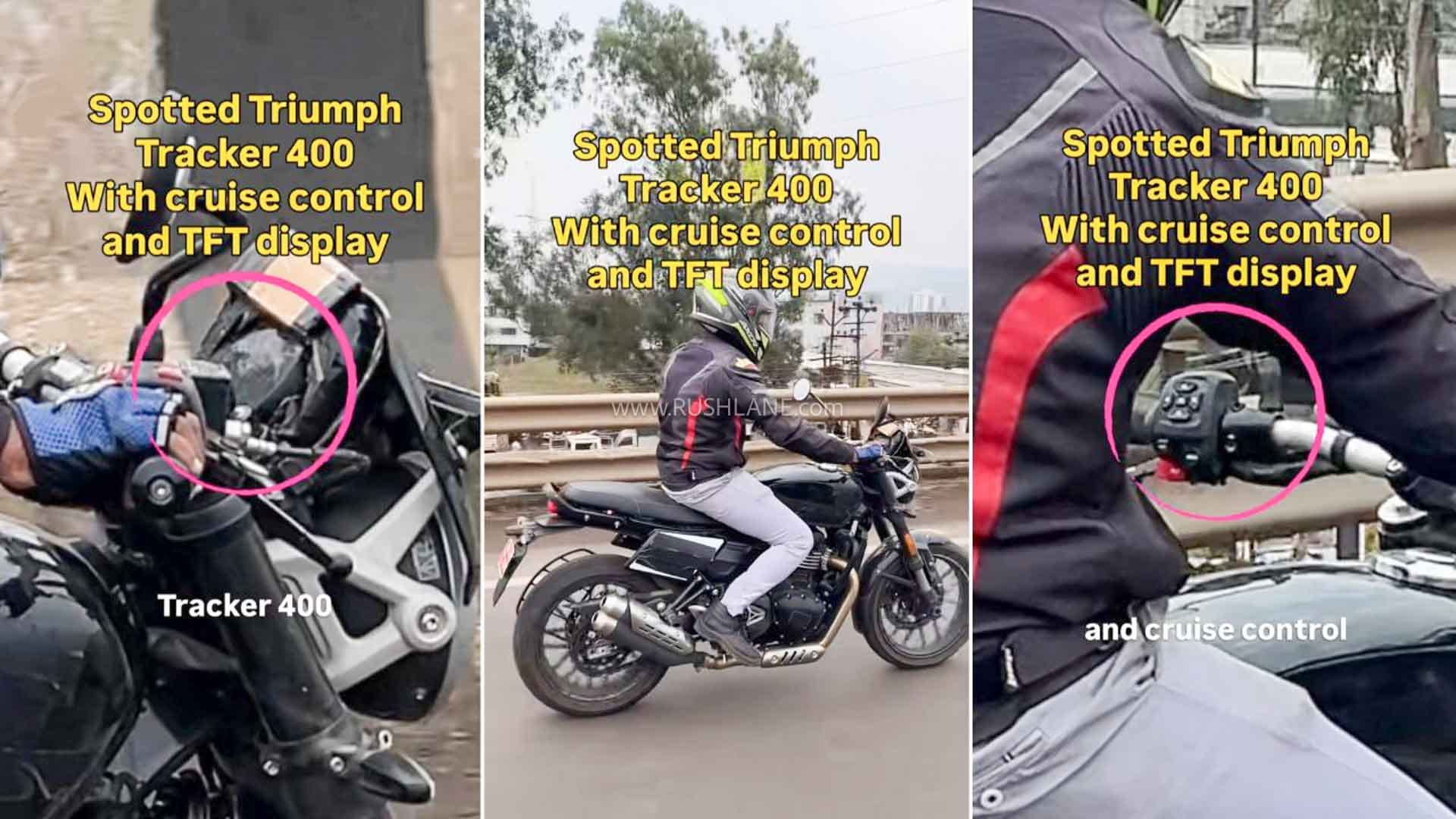
Triumph appears to be addressing the single loudest complaint leveled at its entry-level modern classic fleet: the lack of modern instrumentation and touring tech on the highway. Fresh spy photographs emerging from testing grounds reveal a near-production Triumph Tracker 400 prototype fitted with an all-new full-color circular TFT display and dedicated cruise control switchgear.
Following hot on the heels of the Triumph Thruxton 400 café racer prototype seen in development, this flat-track-styled roadster demonstrates that Hinckley and manufacturing partner Bajaj have no intention of leaving their 398cc single-cylinder platform frozen in entry-level specification.
Circular TFT Tech Borrowed From the Bonneville T40
The most prominent revision sitting atop the wide aluminium tracker bars is a full-color 4-inch circular TFT instrument console. Rather than grafting an awkward rectangular automotive-style screen onto a retro headlight cowl, Triumph has adapted the clean circular unit recently rolled out across the larger Bonneville T40 platform.
The digital display replaces the semi-analogue speedometer and small digi-dash found on the standard Speed 400 and Scrambler 400 X. It provides crisp full-color readouts for speed, engine revs, gear position, ambient temperature, and fuel level, alongside full Bluetooth integration with the My Triumph connectivity suite. Riders can expect turn-by-turn navigation mirroring via Google Maps, incoming call management, and media playback control directly on the dial.
To operate the expanded menu architecture, the left switchgear cube has been completely redesigned. A tactile four-way directional joystick and dedicated home/back buttons allow the rider to toggle through trip computers and rider modes without taking their hands off the grips—a massive ergonomic improvement over reaching forward to press rubber buttons on the gauge bezel.
Electronic Cruise Control Arrives on the TR-Series
Look closely at the updated left switch block and electronic throttle body assembly, and the headline mechanical upgrade becomes obvious: dedicated electronic cruise control buttons. Because the 398cc DOHC TR-series thumper already features ride-by-wire throttle control from the factory, adding genuine electronic cruise control requires zero supplementary throttle cables or bulky vacuum servos—only calibrated firmware and dedicated handlebar switchgear.
“The TR-series engine always had the ride-by-wire architecture capable of supporting advanced rider aids. Integrating adaptive highway features like cruise control into the 400cc class transforms these machines from mere city commuters into genuine long-distance touring propositions.”
For European riders who frequently use these lightweight thumpers to tackle 300-kilometer motorway transfers before hitting Alpine twisties, electronic cruise control eliminates throttle-wrist fatigue on flat autoroutes. It places the Tracker 400 in an exclusive club among the best 300-400cc motorcycles for A2 riders, where cost-cutting usually strips out distance-friendly conveniences.
The Rider’s Trade-Off: Electronic Polish vs Clean Mechanical Simplicity
Every tech upgrade brings an ergonomic compromise. The beauty of the original 400cc modern classic roadsters was their unpretentious simplicity: turn the key, watch an analogue needle sweep, and ride without staring at a miniature smartphone display glowing in your peripheral vision.
A full-color TFT display increases electrical complexity, requiring a beefier stator output and exposing sensitive electronics to torrential rain and trail vibrations. Furthermore, navigating multi-tier digital menus to check tyre pressures or reset a trip meter demands more cognitive attention than glancing at a mechanical odometer. However, given that riders consistently commute and tour on the 400 platform, the trade-off favors smartphone-linked navigation and effortless highway cruising over nostalgic minimalism.
Specification Benchmark: Triumph Tracker 400 vs Speed 400 & Scrambler 400 X
| Metric | Triumph Tracker 400 (Prototype) | Triumph Speed 400 | Triumph Scrambler 400 X |
|---|---|---|---|
| Engine | 398.15cc liquid-cooled DOHC single | 398.15cc liquid-cooled DOHC single | 398.15cc liquid-cooled DOHC single |
| Power Output | 40 PS (29.4 kW) @ 8,000 rpm | 40 PS (29.4 kW) @ 8,000 rpm | 40 PS (29.4 kW) @ 8,000 rpm |
| Torque Output | 37.5 Nm @ 6,500 rpm | 37.5 Nm @ 6,500 rpm | 37.5 Nm @ 6,500 rpm |
| Display Unit | 4.0-inch circular full-color TFT | Analogue speedometer with LCD inset | Analogue speedometer with LCD inset |
| Cruise Control | Electronic (handlebar switch-activated) | None | None |
| Front Suspension | 43mm upside-down forks (140mm travel) | 43mm upside-down forks (140mm travel) | 43mm upside-down forks (150mm travel) |
| Wheels & Tyres | 17-inch cast alloy / dual-sport rubber | 17-inch cast alloy / street rubber | 19-inch front, 17-inch rear alloy |
| Estimated EU Price | €6,295 (est.) | €5,795 | €6,395 |
What We Know vs What’s Still Unclear
What We Know: - Confirmed Instrumentation: The circular 4-inch TFT display from the Bonneville family is physically mounted and operating on testing mules. - Dedicated Switchgear: An all-new left-hand control pod incorporates a 4-way navigation cube and cruise control toggle. - Engine Retention: The proven 398cc liquid-cooled, four-valve DOHC single remains unchanged, putting out 40 PS and 37.5 Nm. - Chassis Geometry: Uses a flat-tracker stance with mid-rise wide handlebars, a flatter bench seat, and 17-inch wheels shod in aggressive dual-sport tread.
What’s Still Unclear: - European Rollout Schedule: While Indian homologation is expected by mid-2027, European showroom delivery will likely slide into late 2027 as a 2028 model. - Pricing Delta: It remains unconfirmed whether Triumph will charge a premium over the base Speed 400 or integrate the TFT across the entire updated lineup. - IMU Integration: Whether the ride-by-wire upgrade includes lean-sensitive cornering ABS or remains a conventional dual-channel Bosch system.
Media citation: Editorial outlets and forums may quote excerpts with attribution and a link to Throttle Times.
Reporting via: rushlane.com, bikedekho.com