Honda Overhauls 2027 CBR1000RR-R Fireblade: Variable Intake Funnels and HRC Edition
215 PS at 14,000 rpm + Two-stage variable intake funnels and 20% softer frame lateral rigidity + Honda finally built the Fireblade for WorldSBK podiums instead of bench-racing dynos.

Part of Throttle Times’ live coverage of EICMA 2026.
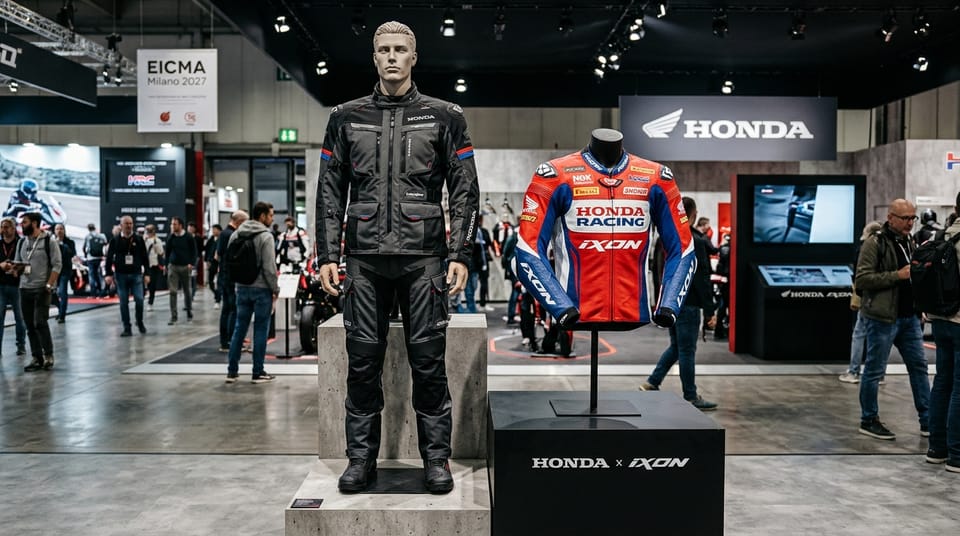
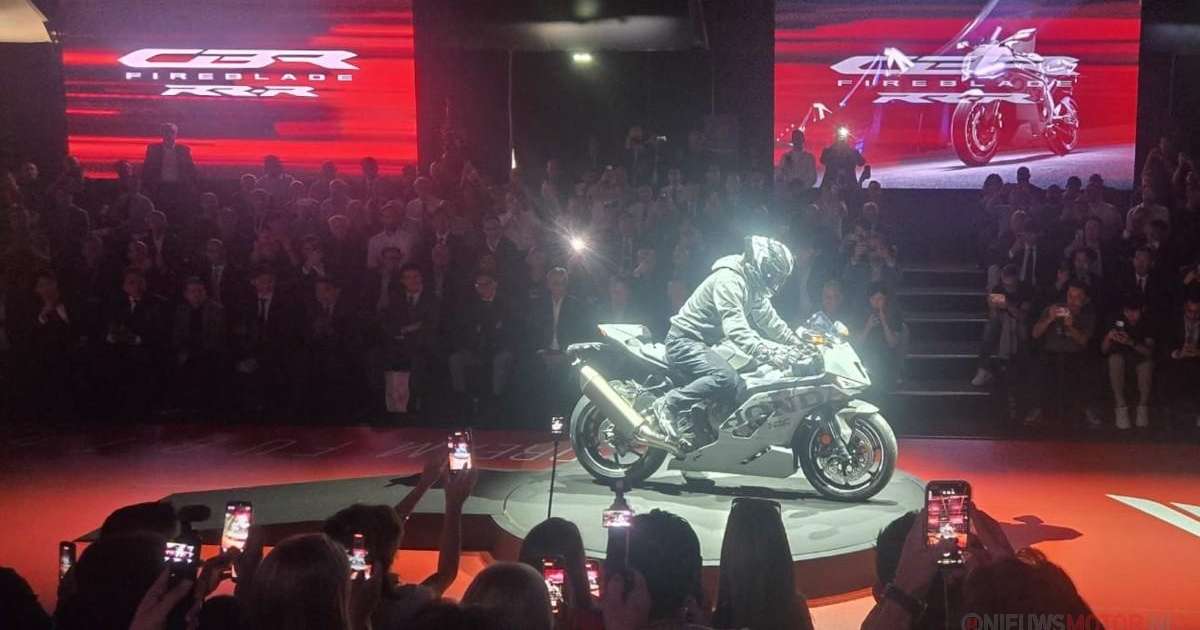
Honda has officially pulled the covers off its heavily redesigned 2027 CBR1000RR-R Fireblade series at EICMA in Milan, admitting through action what Superbike paddock mechanics have whispered for four seasons: raw peak power is useless if a rider cannot get the front wheel turned.
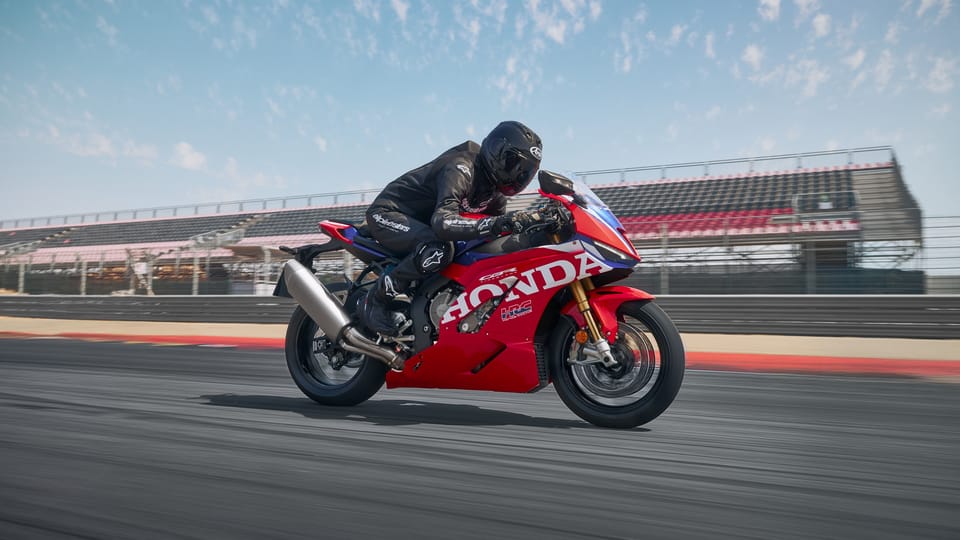
Developed under a strict “race-first, road-second” mandate by Honda Racing Corporation (HRC), approximately 75% of the motorcycle’s structural and mechanical components are completely newly developed. By softening lateral chassis rigidity by 20%, stretching the wheelbase, and engineering a mass-production two-stage variable air intake funnel system, Honda has transformed its 215 PS track projectile from a rigid bench-presser into a compliant, rider-centric apex hunter. It joins an explosive crop of track specials at Milan, alongside the screaming CBR500R Four and the limited-run Aprilia RSV4 Obscure Spe.Ed.
The 215 PS Inline-Four: Variable Intake Funnels and HRC Internal Surgery
The 999.9cc DOHC inline-four produces a claimed 214.6 hp (160 kW / 215 PS) at 14,000 rpm and 114 Nm of torque at 10,500 rpm, debuting Honda’s first mass-produced Two-Stage Variable Air Funnel System to rescue midrange drive.
Previously, the short-stroke Fireblade engine suffered from a peaky power curve that demanded astronomical revs to clear corner exits, punishing anything less than flawless gear selection. The new electronic variable funnel system dynamically alters intake tract length according to engine RPM and throttle-by-wire demand. At low-to-mid revs, lengthened intake runners accelerate incoming air velocity for instantaneous throttle pickup; as the engine passes 10,000 rpm, the upper velocity stacks lift, shortening the intake tract to feed unobstructed high-velocity volume straight into the combustion chambers.
Internal engine revisions run deep: new lightweight camshafts alter valve lift and timing, machined piston crowns bump compression, magnesium engine covers shed unsprung mass, and lightened crankcases improve oil scavenging under extreme 60-degree lean angles. A redesigned titanium Akrapovič exhaust system reduces backpressure while meeting strict Euro 5+ emissions limits.
“A 215-horsepower motorcycle that refuses to communicate edge grip through the handlebar triple clamp is simply frightening. By tuning 20% lateral compliance back into the main spar, we gave the front tire room to breathe and generate mechanical grip on corner entry.”
Re-Engineered Chassis: Subtracting Rigidity to Multiply Lap Times
The 2027 Fireblade’s aluminum twin-tube frame has been fundamentally re-engineered to decrease lateral rigidity by 20% while preserving torsional and longitudinal stiffness for stability under heavy trail-braking.
Decades of Grand Prix engineering demonstrate that excessive frame stiffness turns a motorcycle into a vibration resonator on rough track surfaces, skipping over ripples and overwhelming the tire carcass. Honda’s engineers re-profiled the inner spar wall thicknesses and cast new cylinder head hangers, allowing the chassis to flex minutely under maximum lateral lean. The aluminum swingarm has also been re-welded with tuned flex channels, paired with an extended 1,450 mm wheelbase that reins in power-wheelies without relying solely on intrusive electronic wheelie control interventions.
Three Distinct Tiers: Standard, SP, and the WSBK HRC Works Edition
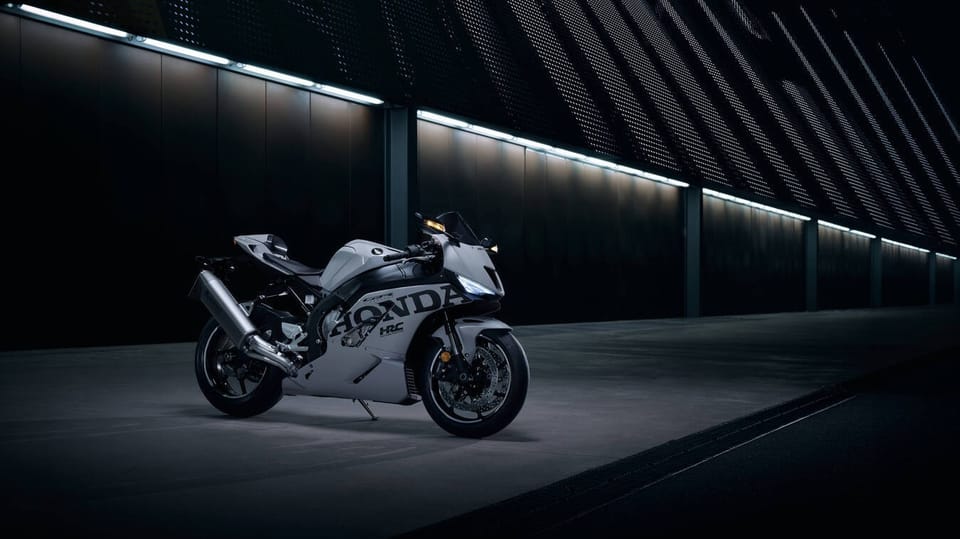
The 2027 lineup introduces a restructured three-tier variant hierarchy, crowned by the road-legal, single-seat CBR1000RR-R Fireblade HRC Works Edition homologation special.
- CBR1000RR-R Fireblade (Standard): The foundation model, equipped with fully adjustable mechanical Showa 43 mm BPF upside-down forks, a Showa BFRC-lite rear shock, and radial Nissin four-piston calipers.
- CBR1000RR-R Fireblade SP: Upgrades suspension to third-generation Öhlins Smart Electronic Control (S-EC 3.0) 43 mm NPX pressurized forks and TTX36 rear shock, clamped by top-tier Brembo Hypure four-piston radial monobloc calipers on 330 mm discs.
- CBR1000RR-R Fireblade HRC Works Edition: The pure FIM WorldSBK qualification platform. It strips off passenger accommodations, fits full carbon-fiber front winglets with integrated vortex generators, adds a lightweight lithium-ion race battery, and includes adjustable swingarm pivot inserts and steering stem eccentric collars to allow chassis geometry adjustments in the paddock.
Side-by-Side: 2027 Fireblade SP vs Predecessor vs Aprilia RSV4
| Metric / Specification | 2027 Honda Fireblade SP | 2024 Honda Fireblade SP | 2026 Aprilia RSV4 Factory |
|---|---|---|---|
| Engine Architecture | 999.9cc Inline-Four | 999.9cc Inline-Four | 1,099cc 65° V4 |
| Peak Power Output | 214.6 hp (160 kW) @ 14,000 rpm | 214.6 hp (160 kW) @ 14,500 rpm | 217 hp (159.5 kW) @ 13,000 rpm |
| Peak Torque | 114 Nm @ 10,500 rpm | 113 Nm @ 12,500 rpm | 125 Nm @ 10,500 rpm |
| Intake Architecture | Two-stage variable air funnels | Fixed intake runners | Fixed length velocity stacks |
| Frame Rigidity | -20% lateral flex reduction | Ultra-rigid cast twin-spar | Dual-beam aluminum with adjustable pivot |
| Wheelbase | 1,450 mm | 1,437 mm | 1,439 mm |
| Suspension Package | Öhlins S-EC 3.0 electronic | Öhlins S-EC 2.0 electronic | Öhlins SmartEC 2.0 electronic |
| Front Braking Calipers | Brembo Hypure Radial Monobloc | Brembo Stylema Monobloc | Brembo Stylema Monobloc |
| Kerb Weight (90% fuel) | 200 kg | 201 kg | 202 kg |
| Est. European Pricing | ~€27,500 (SP) / ~€34,000 (HRC) | €26,890 | €26,199 |
The Rider’s Trade-Off: WorldSBK Homologation vs Road Manners
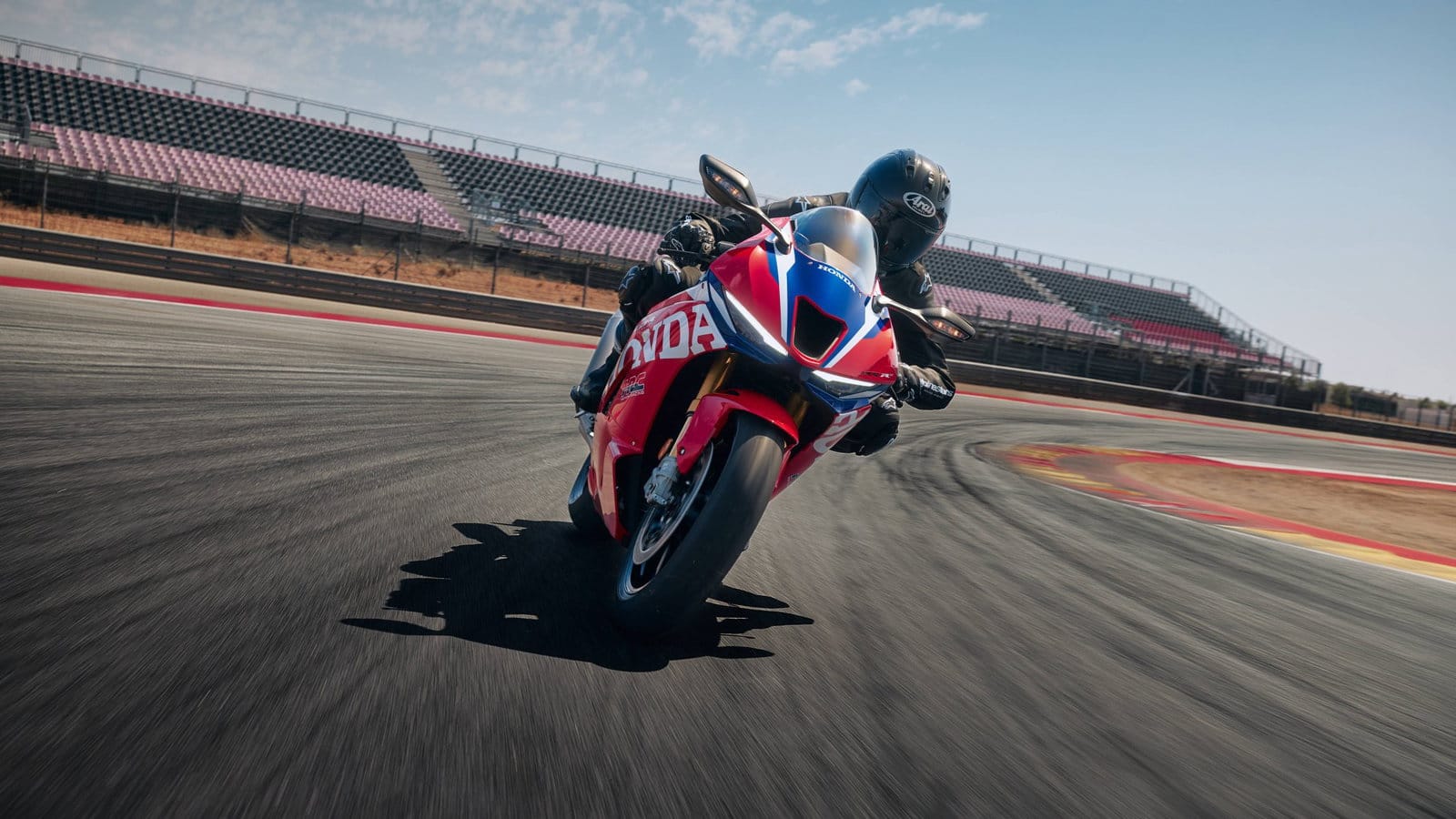
The unapologetic trade-off in the 2027 Fireblade’s design is its singular commitment to closed-circuit telemetry. By gearing first gear 5% taller and setting the clip-on handlebars low and aggressive over the enlarged airbox intake, Honda has built a machine that feels cramped, frantic, and recalcitrant at anything below 80 km/h. On undulating European B-roads, the tall gearing requires feathering the clutch through urban roundabouts, while the radiator cooling fans blast blistering engine heat over the rider’s shins. But tip the chassis into a third-gear sweep at 160 km/h, and the 20% softer lateral flex pays immediate dividends: where the old bike chattered its front tire over tarmac seams, the new chassis flexes obediently, planting the front Bridgestone slick and letting the rider get on the gas meters earlier.
Media citation: Editorial outlets and forums may quote excerpts with attribution and a link to Throttle Times.
Official source: https://global.honda/en/newsroom/news/2026/
Reporting via: visordown.com, nieuwsmotor.nl