BMW Unleashes the 218 HP M 1000 RS at EICMA as a €40,000 Limited Edition
218 hp ShiftCam superbike engine + 196 kg DIN kerb weight with carbon winglets + BMW just built the most terrifyingly powerful naked bike on earth.

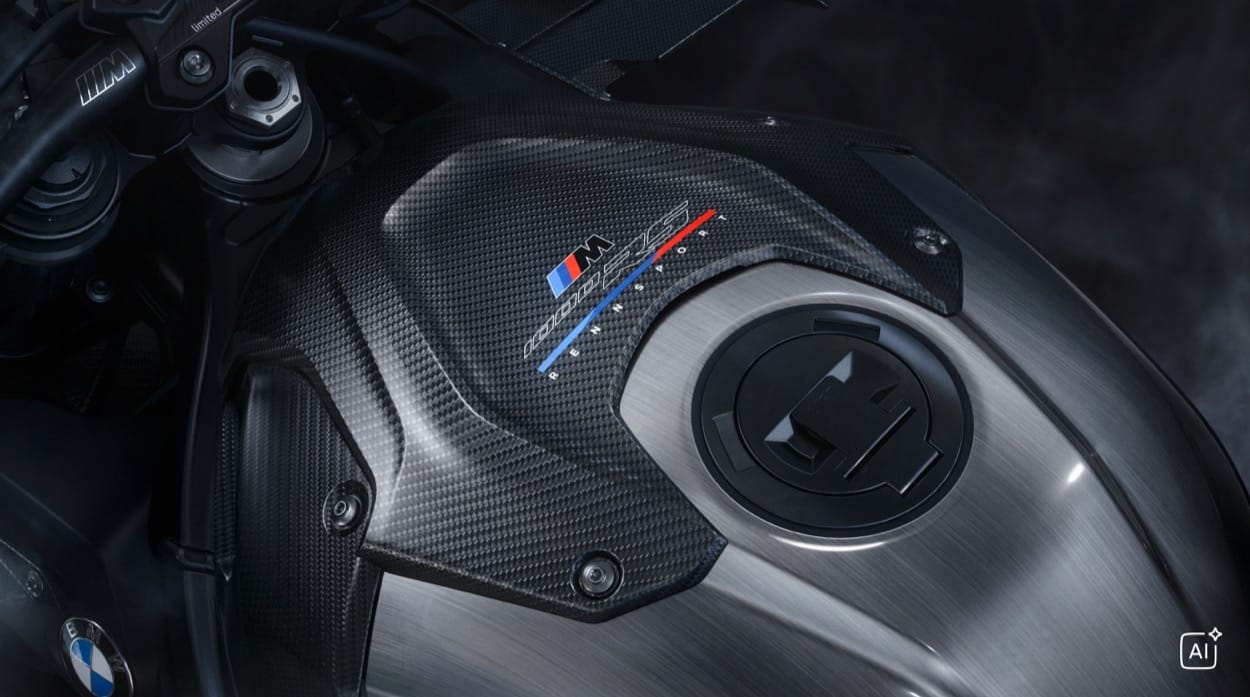
Part of Throttle Times’ live coverage of EICMA 2026 motorcycle reveals.
BMW Motorrad has pulled the covers off the M 1000 RS at EICMA 2026, dropping the full-fat 218 hp ShiftCam superbike engine into an ultra-exclusive, €40,000 hypernaked limited to just 1,000 units worldwide.
When BMW introduced the M 1000 R two years ago with 210 hp, most of the motorcycling world assumed the Munich brand had hit the ceiling of sane roadster performance. The M 1000 RS obliterates that assumption. Rejecting the detuned camshaft profiles and softer rev ceilings common to production nakeds, BMW engineers transplanted the raw, screaming heart of the WorldSBK-homologated M 1000 RR superbike directly between an exposed cast aluminum frame, creating the most powerful production hypernaked motorcycle ever sold.
218 HP ShiftCam Inline-Four: 0-100 km/h in 3.2 Seconds
The 2027 BMW M 1000 RS is powered by a 999cc water/oil-cooled inline-four engine with BMW ShiftCam variable valve timing, producing 218 hp (160 kW) at 14,500 rpm and 113 Nm of torque at 11,000 rpm.
Unlike standard roadster engines tuned for bottom-end torque at the expense of high-RPM thrust, the RS uses CNC-machined combustion chambers, lightweight forged 2-ring pistons, titanium valves, and friction-reducing DLC-coated finger followers. The rev limiter sits at an astronomical 14,600 rpm. Pushing a DIN wet kerb weight of just 196 kg, the M 1000 RS sprints from 0 to 100 km/h in 3.2 seconds and hits an electronically limited top speed of 283 km/h.
“The M 1000 RS is not an upright tourer or a weekend compromise,” explained BMW M Motorrad’s head of product development in Milan. “We took the pure, uncompromised WorldSBK engine architecture from our superbike, stripped off the fairings, and engineered an aerodynamic package that keeps 218 horsepower planted without clip-ons.”
Exhaust gasses exit through an ultra-lightweight full-titanium M exhaust system with twin catalytic converters, saving 3.8 kg over standard stainless steel plumbing while meeting Euro 5+ emissions limits.
Aerodynamic Downforce and Track-Biased Ergonomics
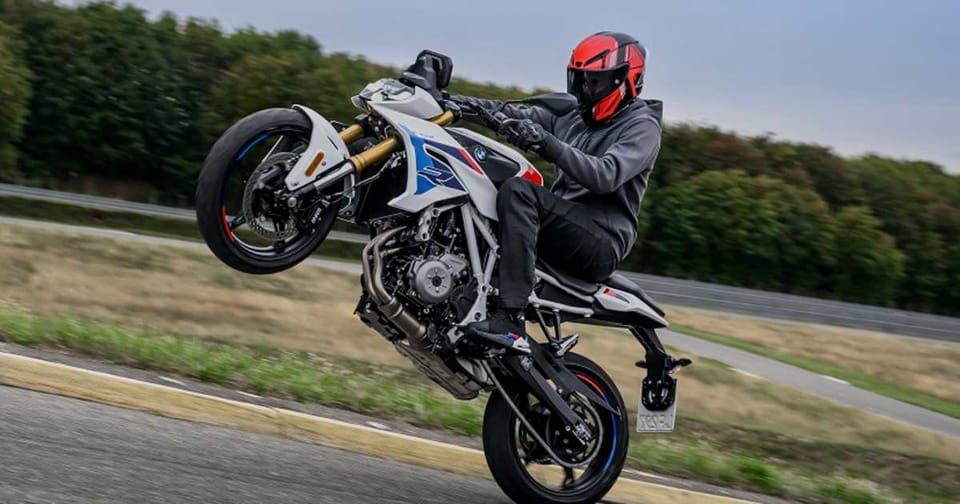
To prevent 218 hp from turning the front 17-inch wheel into a permanent sky-pointing unicycle, the M 1000 RS features massive matt-carbon aerodynamic winglets integrated into the radiator cowls.
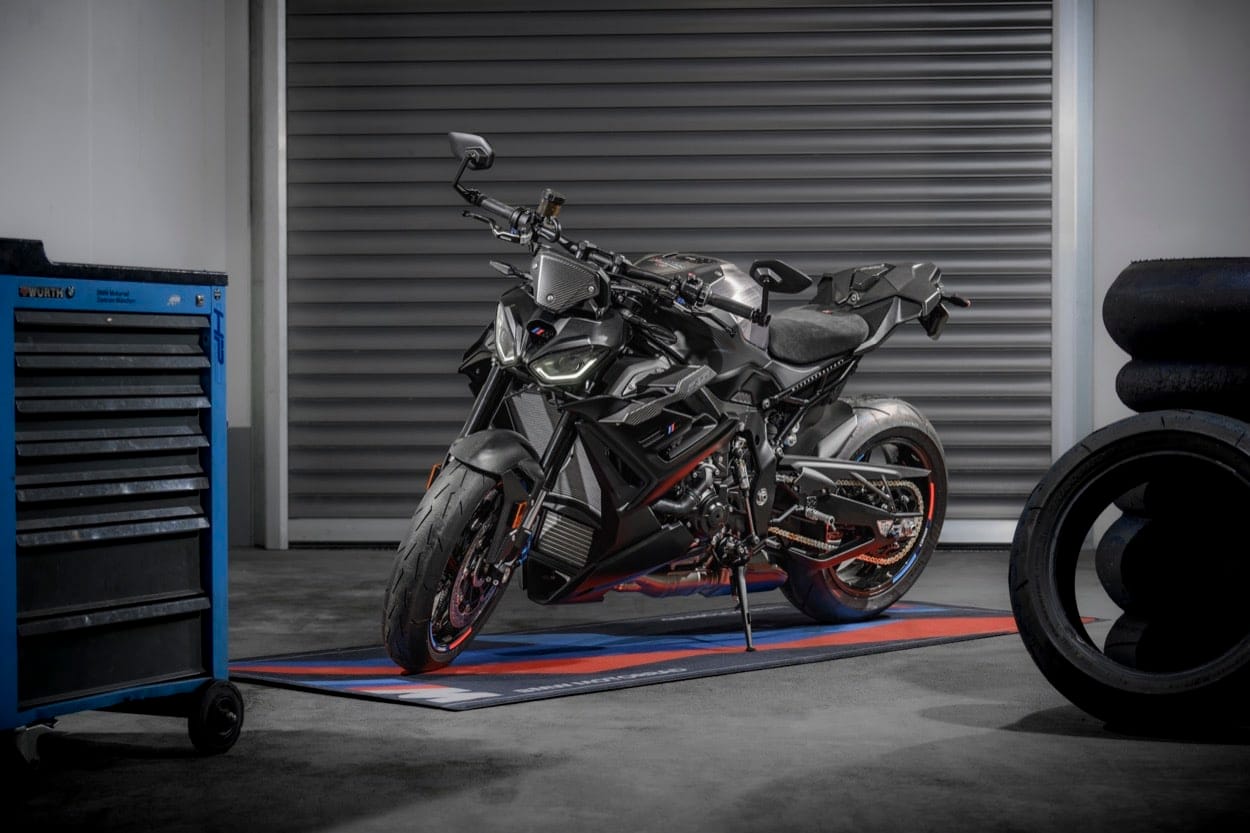
At 220 km/h, these carbon aerofoils generate 17.4 kg of vertical aerodynamic downforce over the front axle, suppressing wheelies under wide-open throttle and stabilizing the chassis under violent high-speed braking.
The ergonomics depart dramatically from standard roadsters. Seat height is increased by 20 mm to 850 mm on an Alcantara-trimmed M sport saddle, paired with milled M RR rearset footpegs positioned higher and further rearward. The one-piece black aluminum handlebar is flat and swept forward, loading the rider’s chest and wrists over the steering head to maximize front-end feedback during aggressive corner turn-in.
Suspension is governed by Dynamic Damping Control (DDC) semi-active 45 mm upside-down forks and an aluminum underslung swingarm with a central strut. M Carbon composite wheels come standard, wrapped in track-ready 120/70-ZR17 front and massive 200/55-ZR17 rear rubber. Stopping power is anchored by radial-mount M monobloc four-piston calipers gripping 320 mm twin floating discs.
The Rider’s Trade-Off: €40,000 for Violent Wind and Zero Rest
The mechanical reality of the BMW M 1000 RS is that it is a WorldSBK machine stripped of the fairings that make 200+ horsepower physically tolerable.
At track days on wide circuits like Mugello or Spa-Francorchamps, having 218 hp in an agile 196 kg naked chassis is breathtaking. But on public roads, the trade-off is brutal. With no windscreen to deflect airflow, hanging on at speeds above 160 km/h requires intense neck and shoulder exertion. The raised 850 mm seat and aggressive rearset footpegs put significant weight on your wrists in city traffic. Furthermore, at €40,000, it costs more than an ultra-capable adventure flagship like the BMW R 1300 GS and an entry-level naked combined. For road riders seeking usability, recent unveilings like the Suzuki GSX-10R offer 152 hp with real wind protection and compliant ergonomics; the M 1000 RS is pure mechanical excess for collectors with deep pockets.
Hypernaked Benchmark: The 200+ HP Club
| Specification | 2027 BMW M 1000 RS | BMW M 1000 R | Ducati Streetfighter V4 SP2 | MV Agusta Brutale 1000 RR |
|---|---|---|---|---|
| Engine Type | 999cc inline-4 ShiftCam | 999cc inline-4 ShiftCam | 1,103cc 90° Desmosedici V4 | 998cc inline-4 DOHC |
| Max Power | 218 hp (160 kW) @ 14,500 rpm | 210 hp (154 kW) @ 13,750 rpm | 208 hp (153 kW) @ 13,000 rpm | 208 hp (153 kW) @ 13,000 rpm |
| Max Torque | 113 Nm @ 11,000 rpm | 113 Nm @ 11,000 rpm | 123 Nm @ 9,500 rpm | 116.5 Nm @ 11,000 rpm |
| Wet Weight (DIN) | 196 kg | 199 kg | 196.5 kg | 208 kg |
| Aero Downforce | 17.4 kg @ 220 km/h | 11.0 kg @ 220 km/h | 28 kg @ 270 km/h | N/A (Biplane wings) |
| Production Volume | 1,000 units strictly limited | Regular production | Numbered series | Regular production |
| European Price | €40,000 (Germany) | €23,800 | €38,000 | €36,500 |
European Pricing and Production Allocation
BMW Motorrad confirmed that global production of the 2027 M 1000 RS is strictly capped at 1,000 individually numbered units.
Deliveries will commence in March 2027 across selected European BMW Motorrad M Centres. The base MSRP in Germany is set at €40,000 (including 19% VAT). The standard equipment list includes the M Competition Package, M Carbon wheels, full titanium exhaust, Riding Modes Pro (Rain, Road, Dynamic, Race, Race Pro 1-3), Pit Lane Limiter, Launch Control, and a 6.5-inch TFT display with an exclusive M start-up sequence.
Media citation: Editorial outlets and forums may quote excerpts with attribution and a link to Throttle Times.
Official source: https://www.bmw-motorrad.com/en/models/m/m1000rs.html