BMW R 1300 GS vs Ducati Multistrada V4 vs Triumph Tiger 1200: The €24,000 ADV Shootout
Three flagship adventure bikes, three completely different engine layouts, and about €24,000 on the line -- here is how the BMW R 1300 GS, Ducati Multistrada V4 S, and Triumph Tiger 1200 stack up on real European roads.

If you are shopping for a flagship big-bore adventure motorcycle in Europe with a budget north of €20,000, your three primary choices are the BMW R 1300 GS, the Ducati Multistrada V4 S, and the Triumph Tiger 1200. The BMW R 1300 GS is the benchmark all-rounder offering shaft-drive ease and massive low-down boxer torque in a 237 kg chassis; the Ducati Multistrada V4 S is the high-performance road weapon with a 170 hp superbike-derived engine and a 60,000 km valve interval; and the Triumph Tiger 1200 is the characterful British triple delivering standard touring luxury and shaft drive at a sharper price point. I know this because I have spent the last three months configuring all three on my laptop at midnight while my riding boots gather dust in the hall.
My own bike currently has cobwebs spanning the spokes, and my wife gently reminded me yesterday that our summer holiday involves a rental cottage in Brittany rather than a two-week solo traverse of the Spanish Bardenas Reales. But that has never stopped me from having very loud, very confident opinions about high-speed damping on mountain passes I will probably only ever visit on Google Street View.
If you are actually putting down serious money on a flagship ADV machine, here is how the three class leaders compare when you strip away the brochure poetry and look at the hard European numbers.
The flagship ADV spec sheet, side by side
The table below compares the standard European configurations for the BMW R 1300 GS, the Ducati Multistrada V4 S, and the Triumph Tiger 1200 GT Pro, with all power, torque, weight, and pricing figures verified for the European market.
| Spec | BMW R 1300 GS | Ducati Multistrada V4 S | Triumph Tiger 1200 GT Pro |
|---|---|---|---|
| Engine architecture | 1,300cc flat-twin boxer (ShiftCam) | 1,158cc 90° V4 Granturismo | 1,160cc inline 3-cylinder (T-Plane) |
| Power output | 145 hp (107 kW) @ 7,750 rpm | 170 hp (125 kW) @ 10,750 rpm | 150 hp (110.4 kW) @ 9,000 rpm |
| Peak torque | 149 Nm @ 6,500 rpm | 124 Nm @ 9,000 rpm | 130 Nm @ 7,000 rpm |
| Wet kerb weight (ready to ride) | 237 kg | 240 kg (approx.) | 245 kg |
| Fuel tank capacity | 19 L | 22 L | 20 L |
| Front / rear suspension travel | 190 mm / 200 mm | 170 mm / 180 mm | 200 mm / 200 mm |
| Wheel sizes (front / rear) | 19-inch / 17-inch cast alloy | 19-inch / 17-inch cast alloy | 19-inch / 18-inch cast alloy |
| Final drive | Enclosed shaft (Cardan) | Chain drive | Enclosed shaft (Tri-Link) |
| Seat height (standard) | 850 mm (800–890 mm with options) | 840–860 mm (adjustable) | 850–870 mm (adjustable) |
| Valve clearance service interval | 20,000 km | 60,000 km | 32,000 km |
| Base price in Germany / EU | ~€19,100 (€23,500+ typically spec’d) | ~€24,300 (V4 S) | ~€21,295 |
If those prices make your chest tighten, keep in mind that we previously broke down nine adventure bikes under €10,000 that can tackle gravel trails for less than half the financial exposure. But if you are determined to buy the top shelf, the differences between these three engines dictate everything else about how they ride.
The BMW R 1300 GS: The benchmark all-rounder that went on a 12 kg diet
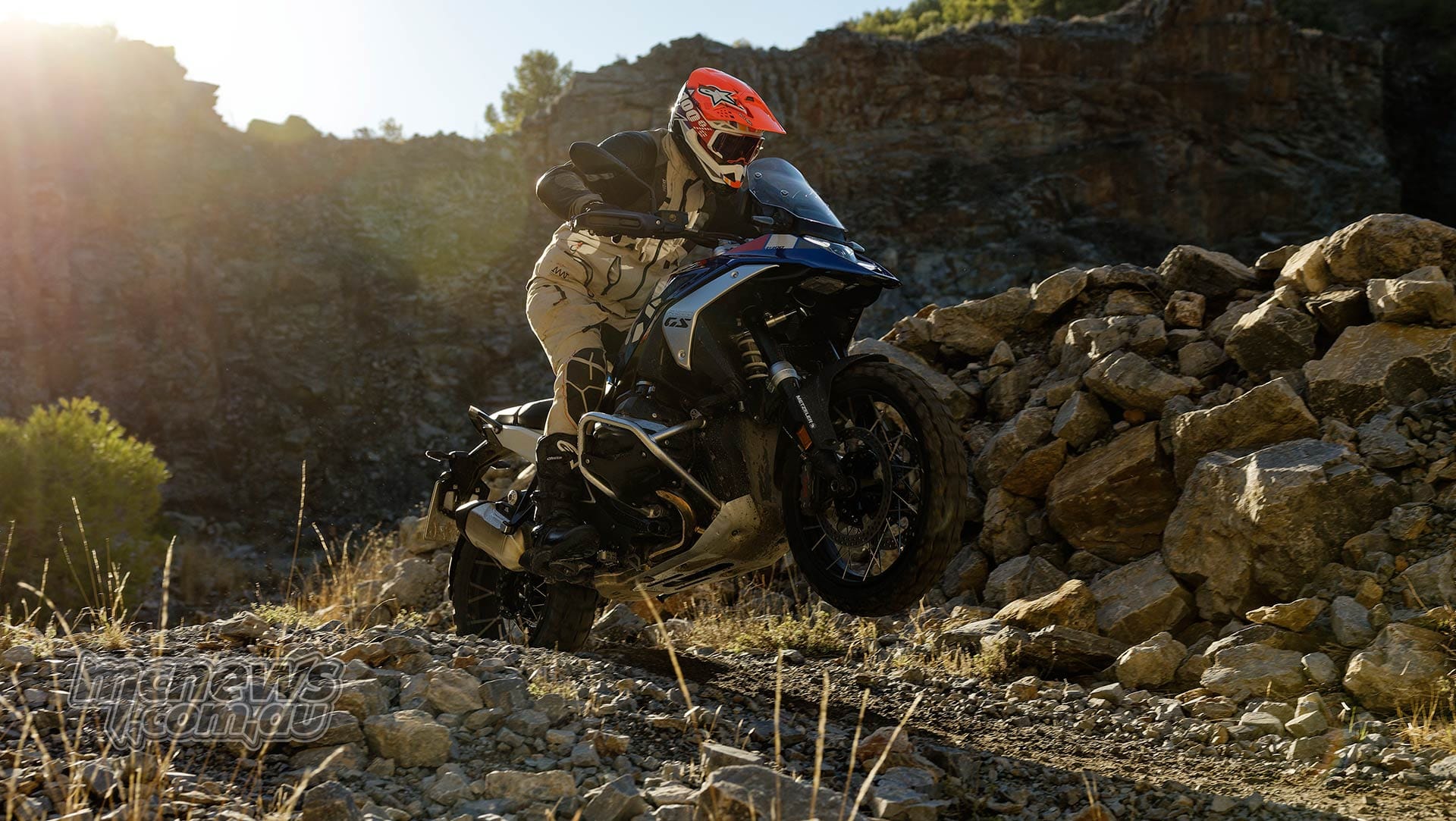
The BMW R 1300 GS produces 145 hp and 149 Nm of torque from a completely redesigned 1,300cc ShiftCam boxer engine, cutting 12 kg of kerb weight compared to the outgoing R 1250 GS to weigh in at 237 kg ready to ride. Placing the six-speed gearbox directly beneath the crankcase shortened the entire drivetrain, pulling the centre of mass dramatically inward.
Where the older 1250 could feel like wrestling a very fast, very polite tractor at low speeds, the BMW R 1300 GS steers with an agility that genuinely surprises. The Evo Telelever front end decouples braking forces from suspension action, meaning you can brake hard into downhill hairpins without the front diving. Combined with the optional adaptive vehicle height control—which drops the saddle by 30 mm down to 820 mm as you roll to a stop—it removes the intimidation of balancing a tall adventure bike at traffic lights.
The boxer’s torque curve is essentially a flat tableland: 149 Nm peaks at 6,500 rpm, but more than 130 Nm is available from just above 3,500 rpm. You do not need to dance on the quickshifter to overtake; you simply roll your right wrist and let the flat-twin shove you down the road. While spy photographers recently caught an even more aggressive BMW M 1300 GS flagship prototype wearing blue brake calipers and carbon trim, the standard R 1300 GS remains the machine that 90 percent of cross-country riders actually need.
The catch is BMW’s option list. The €19,100 German base price is purely theoretical: by the time you add the Touring Package, Dynamic Package with DSA semi-active suspension, and radar cruise control, the invoice easily sails past €24,000 before you have bought panniers.
The Ducati Multistrada V4 S: A 170 hp superbike engine in an adventure touring chassis
The Ducati Multistrada V4 S generates 170 hp (125 kW) at 10,750 rpm and 124 Nm of torque from its 1,158cc V4 Granturismo engine, making it the most powerful production motorcycle in this comparison. Unlike Ducati’s sportbikes, this engine ditches desmodromic valves in favour of conventional valve springs, allowing Ducati to stretch the valve-clearance check interval to an astounding 60,000 km.
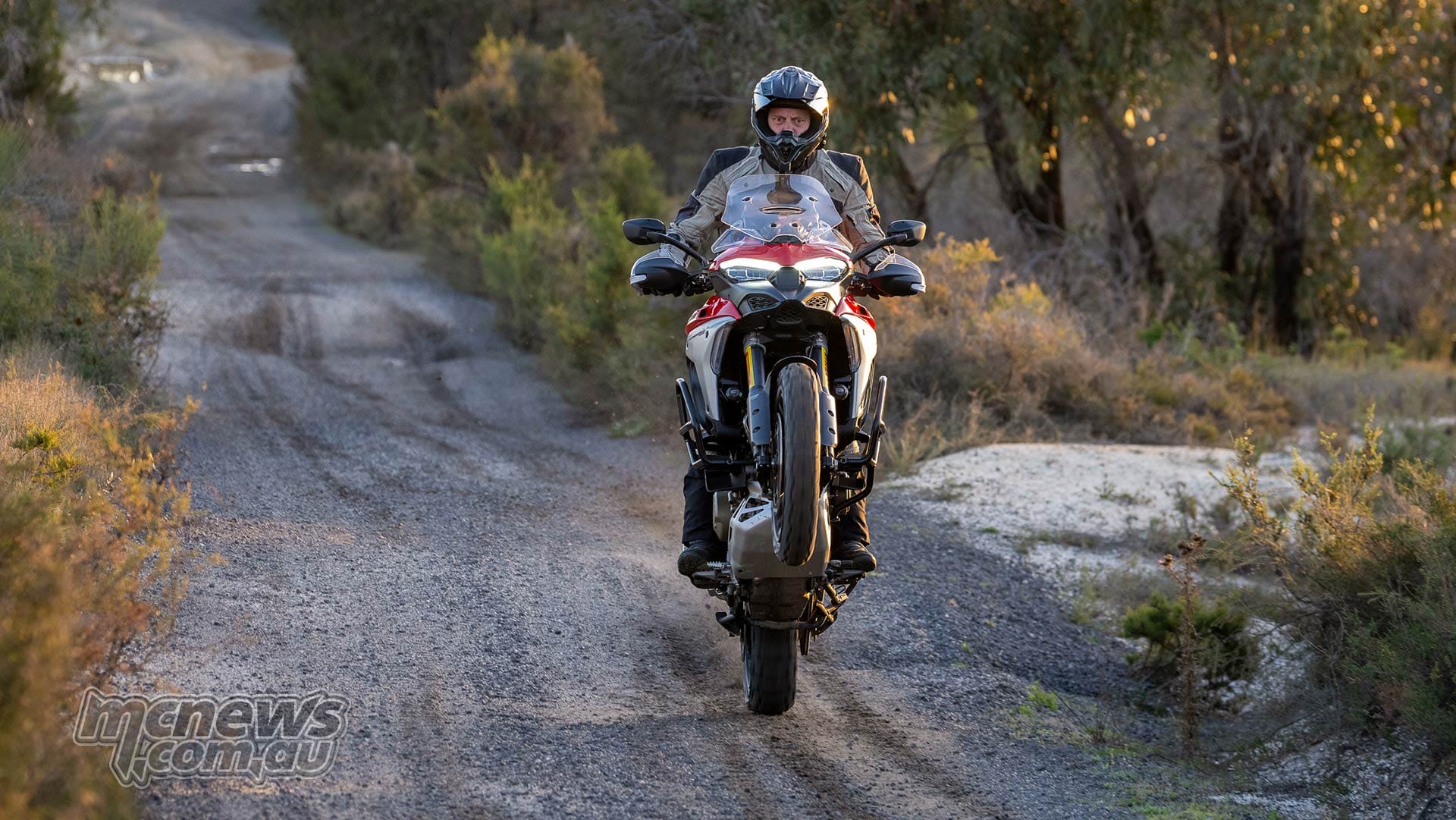
While the ergonomics are upright and all-day comfortable, the soul of the Ducati Multistrada V4 S belongs on tarmac. When you wind that V4 past 7,000 rpm, the intake snarl turns into an intoxicating howl, and the bike accelerates with a ferocity that leaves the BMW and Triumph checking their mirrors. The semi-active Marzocchi Skyhook suspension keeps the bike remarkably flat and poised under hard acceleration and trail-braking.
Touring comfort is exceptional. The windscreen adjusts with a single finger, weather protection is top-tier, and the front and rear radar suite delivers silky-smooth adaptive cruise control alongside blind-spot warnings. If your idea of adventure is blasting across European motorways to spend three days carving Alpine passes at sportbike pace, nothing in this category touches the Multistrada.
The trade-offs are fuel appetite and off-road compromise. When ridden with enthusiasm, the V4’s fuel consumption regularly climbs toward 6.8 L/100 km, draining its 22 L tank faster than the Boxer. And unlike its rivals, the Multistrada relies on a chain final drive, requiring regular cleaning and lubrication after rainy days on the road.
The Triumph Tiger 1200 GT Pro & Rally Pro: The British T-plane triple with standard equipment nobody else includes
The Triumph Tiger 1200 GT Pro produces 150 hp (110.4 kW) at 9,000 rpm and 130 Nm of torque at 7,000 rpm from its 1,160cc inline three-cylinder engine, utilising a T-plane crank with an uneven 1-3-2 firing order that delivers twin-cylinder tractability down low and triple-cylinder rush up high. Weighing 245 kg wet in road-biased GT Pro trim, it matches the BMW with an enclosed shaft drive while undercutting both European rivals on standard factory equipment.
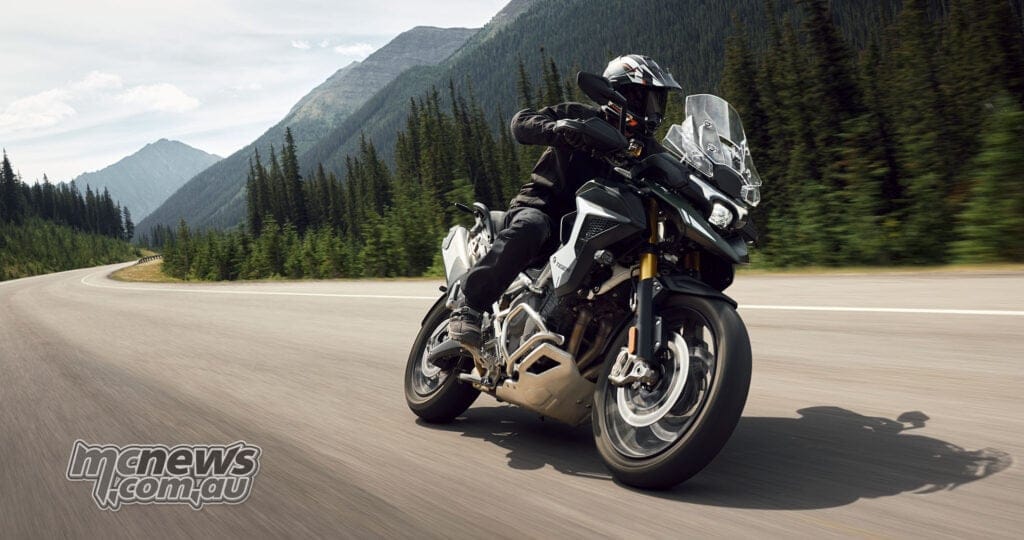
Triumph splits the range into two clear paths: the road-focused GT line with a 19-inch cast front wheel and 200 mm of Showa semi-active suspension travel, and the off-road-ready Rally Pro with a 21-inch tubeless spoked front wheel and 220 mm of travel. If you genuinely plan to venture beyond groomed gravel into rocky ruts, the Tiger 1200 Rally Pro is far more capable off-road than either the standard GS or the Multistrada.
Where the Triumph Tiger 1200 wins on paper is the standard equipment list. On the GT Pro and Rally Pro, items like heated rider and pillion seats, heated grips, cruise control, centre stand, engine protection bars, and an up/down quickshifter are included in the base MSRP of roughly €21,295 to €22,495. To match that specification on a BMW or Ducati, you must tick several expensive option boxes.
Recent factory refinements have smoothed out the engine at low rpm and introduced Active Preload Reduction, which dumps rear shock pressure at a button press to lower the seat height by 20 mm when coming to a halt. The T-plane triple transmits slightly more buzz through the footpegs at steady motorway cruising speeds than the Boxer, but the charismatic exhaust growl more than makes up for it.
Shaft drive vs. chain: The unsexy reality of 10,000 km tours
Both the BMW R 1300 GS and Triumph Tiger 1200 feature enclosed shaft final drives, whereas the Ducati Multistrada V4 relies on a conventional chain and sprockets. While a chain is lighter and robs roughly three to five percent less power through drivetrain friction, shaft drive remains a major quality-of-life advantage on long journeys.
When you roll into a hotel car park after six hours in driving rain, the BMW and Triumph owners park their bikes and head straight inside. The Multistrada owner has to find flat ground, haul a 240 kg bike onto a stand, clean road grit from the links, and spray lube across hot sprockets. Over a 30,000 km ownership cycle, the shaft drive requires nothing more than scheduled fluid changes, while a chain setup demands regular tensioning and at least one full chain-and-sprocket replacement costing €250 to €350.
Maintenance, service intervals, and ownership costs compared
The Ducati Multistrada V4 boasts the longest major valve-clearance service interval at 60,000 km, followed by the Triumph Tiger 1200 at 32,000 km, and the BMW R 1300 GS at 20,000 km. While minor oil and filter changes occur every 10,000 to 15,000 km across all three bikes, valve inspection labour significantly impacts long-term workshop bills.
However, valve check intervals alone do not tell the whole story. The BMW boxer’s cylinder heads stick straight out into the breeze, meaning a technician can remove the rocker covers and inspect the ShiftCam clearances in an hour without stripping the fuel tank, fairings, or radiator. Checking the valves on the Ducati’s compact V4 or the Triumph’s triple requires dismantling substantial bodywork and cooling infrastructure, resulting in higher workshop labour hours even if the intervals are spaced further apart.
Tyre life is another inescapable reality of running 145 to 170 hp through a 240 kg machine. If you fit dedicated touring rubber like the Bridgestone Battlax Adventure A42 tyres we reviewed earlier, you can expect between 8,000 and 11,000 km from a rear tyre under sensible touring use. Fit softer sport-biased rubber to the Multistrada and ride it like a superbike, and you will be ordering fresh rubber every 5,000 km.
Before committing north of €20,000 to any of these machines, proper protective gear is mandatory. If you are budgeting for a machine of this calibre, investing in high-end adventure headgear makes long touring days tolerable—our Shoei Hornet ADV vs Arai Tour-X5 vs Klim Krios Pro helmet shootout highlights which lid keeps wind noise manageable over an eight-hour stint.
Which big-bore adventure bike should you actually buy?
Choosing between these three motorcycles comes down to your personal balance of touring convenience, tarmac performance, and off-road ambition.
Buy the BMW R 1300 GS if you want the most versatile, effortlessly competent adventure tourer on sale today. Its low centre of gravity, massive bottom-end torque, Telelever chassis composure, and maintenance-free shaft drive make it the default European choice for good reason. It hides its weight better than any rival, and its resale value on the used market remains rock-solid across the continent.
Buy the Ducati Multistrada V4 S if your heart beats for sports riding and you want an adventure tourer that can humiliate sportbikes on weekend canyon runs. The 170 hp V4 engine is a mechanical masterpiece, the Skyhook suspension is sublime on tarmac, and the 60,000 km valve intervals provide unexpected peace of mind. It is an emotional, thrilling machine for riders who tour fast on paved surfaces.
Buy the Triumph Tiger 1200 if you want maximum touring equipment for your money, love the mechanical character of an inline triple, or genuinely want to take a heavyweight bike onto rough dirt tracks in Rally Pro spec. With shaft drive, standard heated furniture, and factory crash protection included at a competitive price, it represents the smartest value in the premium heavyweight class.
If you are a newer rider looking at these spec sheets and wondering if they can be adapted for graduated licensing, note that none of these machines qualify: EU regulations prohibit restricting any bike producing over 70 kW to the 35 kW limit, so you will need to start on dedicated A2-licence-legal adventure bikes first. And if you simply cannot justify spending €24,000 on a machine that spends five days a week sitting in the garage next to a lawnmower, step down to our KTM 790 Adventure vs Yamaha Ténéré 700 vs Honda Transalp middleweight comparison, where 80 percent of this real-world capability is available for half the price.
FAQ
Which big-bore adventure bike has the highest horsepower?
The Ducati Multistrada V4 produces the highest peak power in the class at 170 hp (125 kW) at 10,750 rpm, compared to 150 hp on the Triumph Tiger 1200 and 145 hp on the BMW R 1300 GS.
Which of these adventure motorcycles is the lightest?
The BMW R 1300 GS is the lightest of the trio at 237 kg wet and fully fuelled, having shed 12 kg over the previous R 1250 GS, while the Multistrada V4 weighs roughly 240 kg wet and the Tiger 1200 GT Pro weighs 245 kg wet.
Can any of these big adventure bikes be ridden on an A2 motorcycle licence in Europe?
No. Under EU regulations, a motorcycle can only be restricted to the 35 kW (47.6 hp) A2 limit if its original unrestricted output does not exceed 70 kW (95 hp). All three bikes far exceed this threshold.
Which bike has the longest valve service interval?
The Ducati Multistrada V4 leads the industry with a 60,000 km valve clearance check interval for its V4 Granturismo engine, compared to 32,000 km on the Triumph Tiger 1200 and 20,000 km on the BMW R 1300 GS.
Do the BMW R 1300 GS and Triumph Tiger 1200 use shaft drive?
Yes, both the BMW R 1300 GS and Triumph Tiger 1200 use enclosed shaft final drive systems, whereas the Ducati Multistrada V4 uses a traditional chain and sprocket drive.
Official source: https://www.bmw-motorrad.com/en/models/adventure/r1300gs.html
Reporting via: mcnews.com.au, bennetts.co.uk