Shoei Hornet ADV vs Arai Tour-X5 vs Klim Krios Pro: The Adventure Helmet Fight I Can't Stop Having With Myself
Three adventure helmets everyone argues about, compared on price, weight, and certification -- plus the budget flip-up that does 80% of the job for a third of the money.
If you’re choosing between the three helmets everyone in the adventure-helmet comments section argues about, here’s the short version: the Shoei Hornet ADV 06 (from €599) is the best all-rounder for mixed on/off-road riding, the Arai Tour-X5 (from €899) is the one the dirt-first crowd reaches for, and the Klim Krios Pro (around €700-790 depending on graphic) is the lightest and most road-focused of the three at 1,450 g. All three are ECE 22.06 certified, all three take a removable peak off for motorway speeds, and none of them are cheap — which is its own kind of problem I’ll get to.
I’ve spent more time than my wife finds reasonable comparing spec sheets for helmets I don’t currently own, for a Balkans loop I keep “definitely doing this summer” and have now definitely not done for two summers running. Let’s get into it properly.
The quick verdict
| Helmet | Price (EUR) | Weight | Certification | Standout feature |
|---|---|---|---|---|
| Shoei Hornet ADV 06 | €599-729 | ~1,600 g | ECE 22.06 | Best all-round ventilation and finish for the money |
| Arai Tour-X5 | €899-999 | ~1,700-1,736 g | ECE 22.06 | VAS-A visor system, three ride configurations (road/off-road/adventure) |
| Klim Krios Pro | ~€700-790 | ~1,450 g (size L) | ECE 22.06 + DOT | Full carbon shell with Koroyd liner, lightest of the three |
| Scorpion ADX-2 (budget option) | €180-250 | ~1,735-1,834 g | ECE 22.06 | Modular flip-up chin bar at a third of the price |
Shoei Hornet ADV 06 — the one most people should actually buy
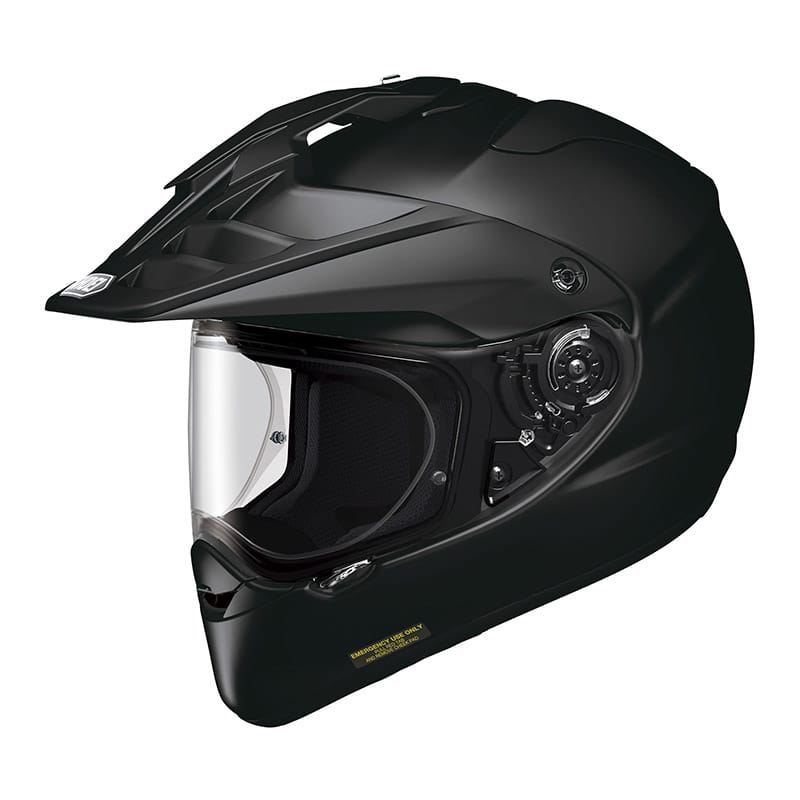
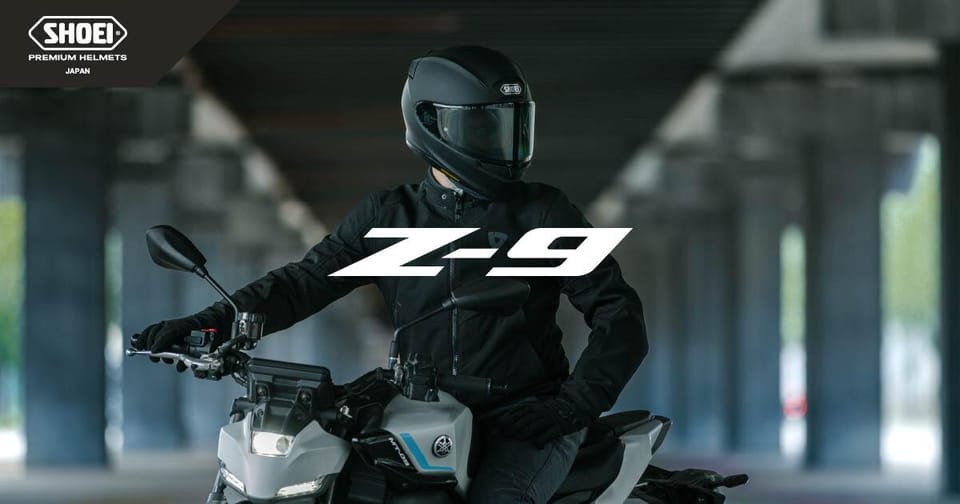
The Shoei Hornet ADV 06 starts at €599 for a solid colour and runs up to €729 for the Invigorate graphic, and it’s the helmet I’d point a friend toward if they only wanted to own one. It uses Shoei’s AIM+ shell construction, ships with a mist-retardant CNS-2 Pinlock lens already fitted, and vents through the chin, brow, and forehead plus six rear outlets — which matters more than it sounds like it should the first time you’re stuck behind a truck in August with the visor cracked.
It’s a fixed chin-bar design, not a flip-up, which is the right trade for anyone who actually rides off-road rather than just wanting the look: a modular hinge is one more thing that can rattle loose on washboard gravel. Shoei’s Hornet ADV already got its ECE 22.06 update earlier this year, so every current unit on sale meets the newer standard — worth confirming on anything you buy secondhand, because not every helmet on shelves has made that jump yet.
The peak isn’t adjustable, which Arai owners will absolutely tell you about, but at 1,600 g and €599 for the base colour it’s the helmet that makes the most sense if you’re buying one helmet to do everything — commute, motorway slog to the ferry, one proper gravel week a year.
Arai Tour-X5 — built by people who still think “adventure” means dirt
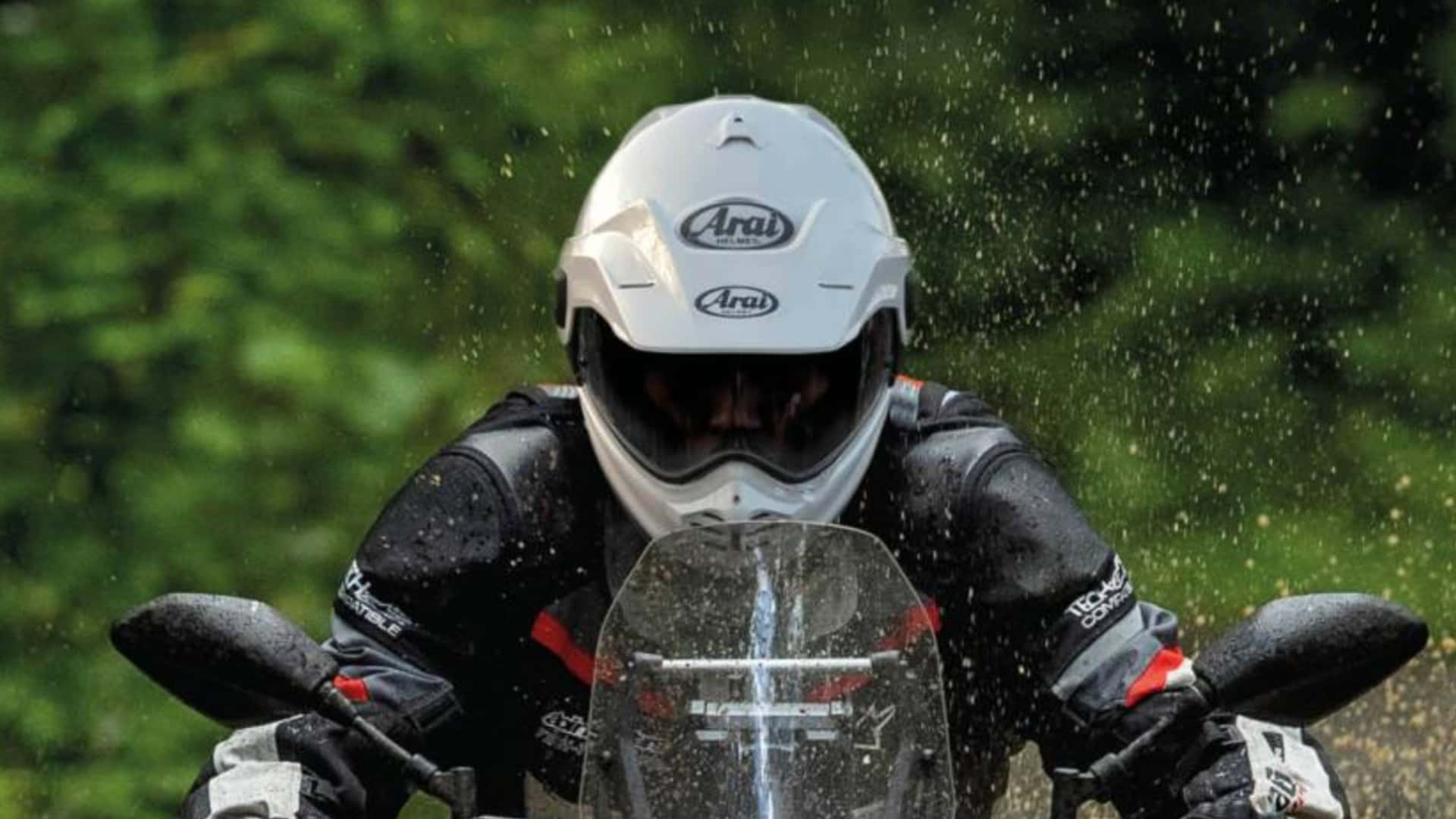
The Arai Tour-X5 costs €899 in a solid colour and €999 for a graphic, which buys you the first major adventure helmet to reach ECE 22.06 and a shell that’s actually three helmets depending on how you configure it — full adventure trim, a stripped-down off-road setup, or a road-focused build with the peak off and the visor down. The new VAS-A visor mechanism is the bit Arai actually talks about, and it’s a genuine improvement on the fiddly peak-and-visor combos of the outgoing Tour-X4.
At 1,700 g solid (1,736 g with the peak fitted), it’s the heaviest of the three here, and €899 is a number that makes you sit with the credit card statement for a minute. But Arai’s whole case is that the shell geometry and the shell’s “glancing off” philosophy matter more at the point of impact than anywhere else on the spec sheet, and that’s not a marketing line invented for this helmet specifically — it’s the same argument Arai’s made since before most adventure helmets existed as a category. If you’re doing actual enduro-adjacent mileage rather than fire roads on the way to a campsite, this is the one the forums that take it seriously tend to land on.
Klim Krios Pro — buying weight off with a credit card
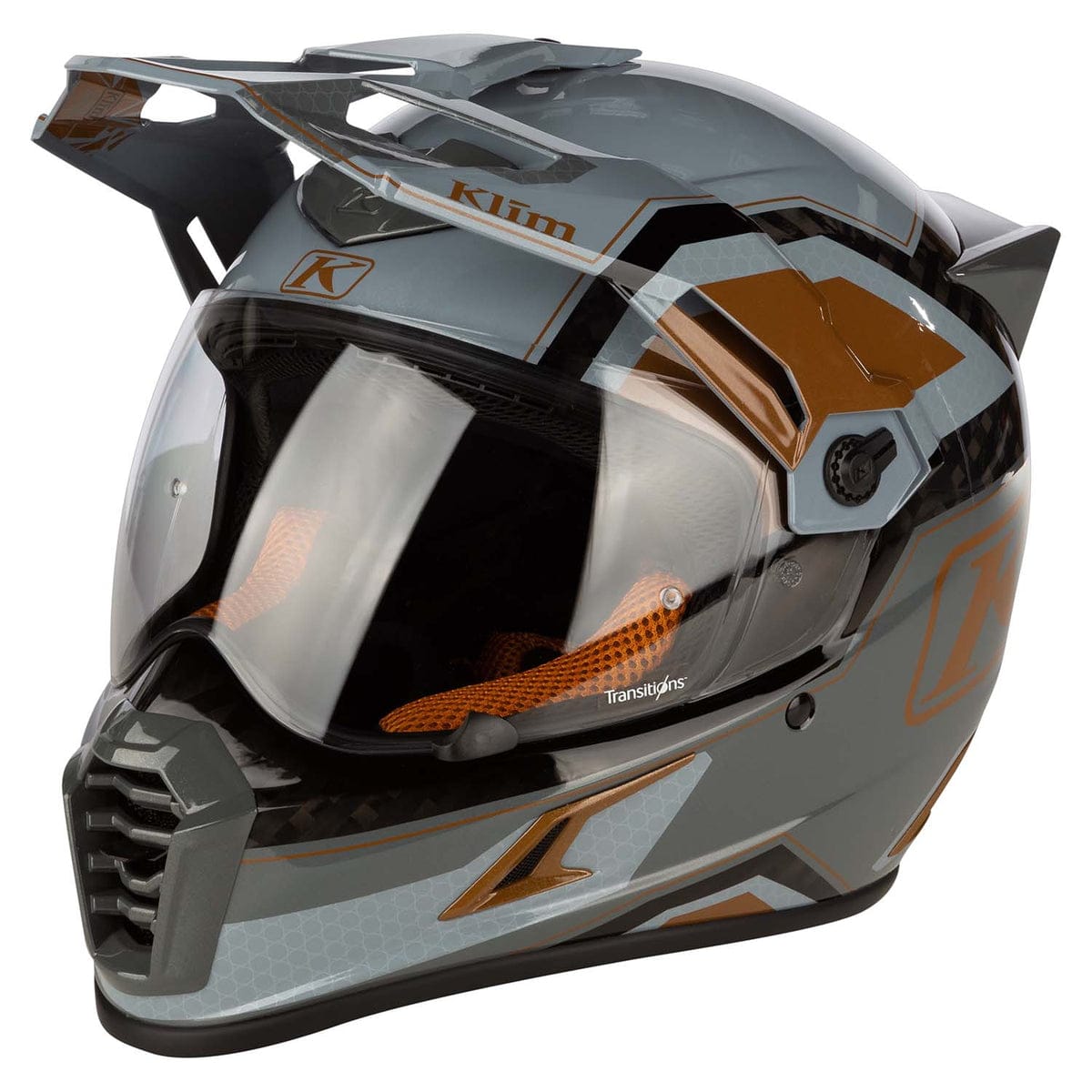
The Klim Krios Pro is the lightest of the three at 1,450 g in a size large, and it gets there with a full hand-laid carbon shell and a Koroyd liner — a honeycomb structure that crushes evenly across impact rather than just compressing like standard EPS foam. Street price lands somewhere around €700-790 depending on the colourway and graphic, which is genuinely all over the place between retailers, so check a current EU price before you commit rather than trusting any single number here, mine included.
It’s ECE 22.06 and DOT certified, has a Pinlock-ready shield with a photochromic lens included as standard, and the vents are fully adjustable at the chin and forehead. The 250 g you save over the Hornet ADV sounds small until you’ve worn any full-face helmet for six hours on a motorway slab and started doing neck-fatigue math instead of paying attention to traffic. If weight is the one spec you actually care about, this is the answer, full stop.
Already own a cheaper helmet? The Scorpion ADX-2 case
Not every rider needs €600-900 of Japanese or American engineering on their head for a helmet that mostly does school runs and the odd gravel lane. The Scorpion ADX-2 is a modular flip-up adventure helmet running €180-250 depending on the graphic — about a third of the Hornet ADV’s price — and it still carries ECE 22.06 certification, a Pinlock-ready visor, and a built-in sun visor. It’s heavier (1,735 g without the peak, 1,834 g with it) and the polycarbonate/ABS shell won’t take a hit the same way carbon or Shoei’s AIM+ fibre blend does, but the flip-up chin bar is genuinely convenient for anyone who just wants to talk to the person at the petrol pump without fully unhelmeting. It’s the sensible choice, which is exactly the kind of choice this article’s narrator is constitutionally bad at making for himself.
How to actually choose between them
Start with certification, not price: all four helmets above are ECE 22.06, which is the standard you want — the older 22.05 rating tests fewer impact angles and speeds, and a lot of stock still being sold hasn’t caught up. Don’t let a discount talk you into last-generation certification.
After that, it’s mostly about what you’re actually doing with the bike. If it’s 90% road and 10% gravel, the Klim’s weight saving pays off every single motorway hour; if the ratio flips toward genuine off-road days, the Arai’s configurability and the Shoei’s fixed, rattle-free chin bar both make more sense than a helmet optimised for being light on tarmac. All three take a clamp-mount mesh intercom without drama, so whether you end up on a Cardo, a Sena, or a shell with comms already built in is a separate decision from the helmet itself. If you ride solo a lot and the idea of being found quickly after a bad crash matters to you, a cheap add-on like Twiceme’s NFC medical-ID tag works on any helmet in this list, no mounting hardware required.
And if you’re shopping for the helmet at the same time as the bike, it’s worth sorting the licence question first — the gear budget looks very different depending on whether you land on one of the A2-legal adventure bikes or something from the sub-€10,000 end of the segment, where a €900 helmet is suddenly a bigger fraction of the total spend than the bike payment makes it feel.
FAQ
Which of these adventure helmets is the lightest?
The Klim Krios Pro, at 1,450 g in size large — about 150-250 g lighter than the Shoei Hornet ADV 06 or Arai Tour-X5, thanks to its full carbon shell and Koroyd liner.
Are the Shoei Hornet ADV, Arai Tour-X5, and Klim Krios Pro all ECE 22.06 certified?
Yes, all three currently ship with ECE 22.06 certification, as does the budget Scorpion ADX-2. That’s the standard to look for — older 22.05-rated stock is still on some shelves and tests fewer impact scenarios.
Can I fit a mesh intercom like a Cardo or Sena to these helmets?
Yes. All three accept clamp-mount mesh intercom units without modification, so the intercom choice is independent of which helmet you pick.
Is there a cheaper alternative if €600-900 is too much?
The Scorpion ADX-2 is a modular flip-up adventure helmet at roughly €180-250, still ECE 22.06 certified, though heavier and built from polycarbonate/ABS rather than fibre or carbon.
Do I need to remove the peak for road riding?
Not strictly, but most riders do at sustained motorway speeds — the peak adds wind buffeting and noise above roughly 110-120 km/h. The Arai Tour-X5 is explicitly designed around swapping between configurations; the Shoei and Klim both allow peak removal too, just without a dedicated “road mode” marketing name attached to it.
Which one should I actually buy?
The Shoei Hornet ADV 06 if you want one helmet that does everything well for the least money. The Arai Tour-X5 if you’re doing real off-road days and value the shell geometry over the price tag. The Klim Krios Pro if weight is the spec that actually changes how your neck feels after six hours. All three beat guessing — just don’t buy on the graphic alone, which is a sentence I am saying to myself as much as to you.
Official product page: https://www.shoei-europe.com/products/hornet-adv-06/