TT 2027 Sidecar Rules Spark Backlash: 600cc Ban and Spec ECUs Threaten Grid
600cc four ban & €30,000 chassis rebuilds + Spec Mectronik ECUs imposed without consultation + TT sidecar outfits push back against rules that could empty the 2027 grid.

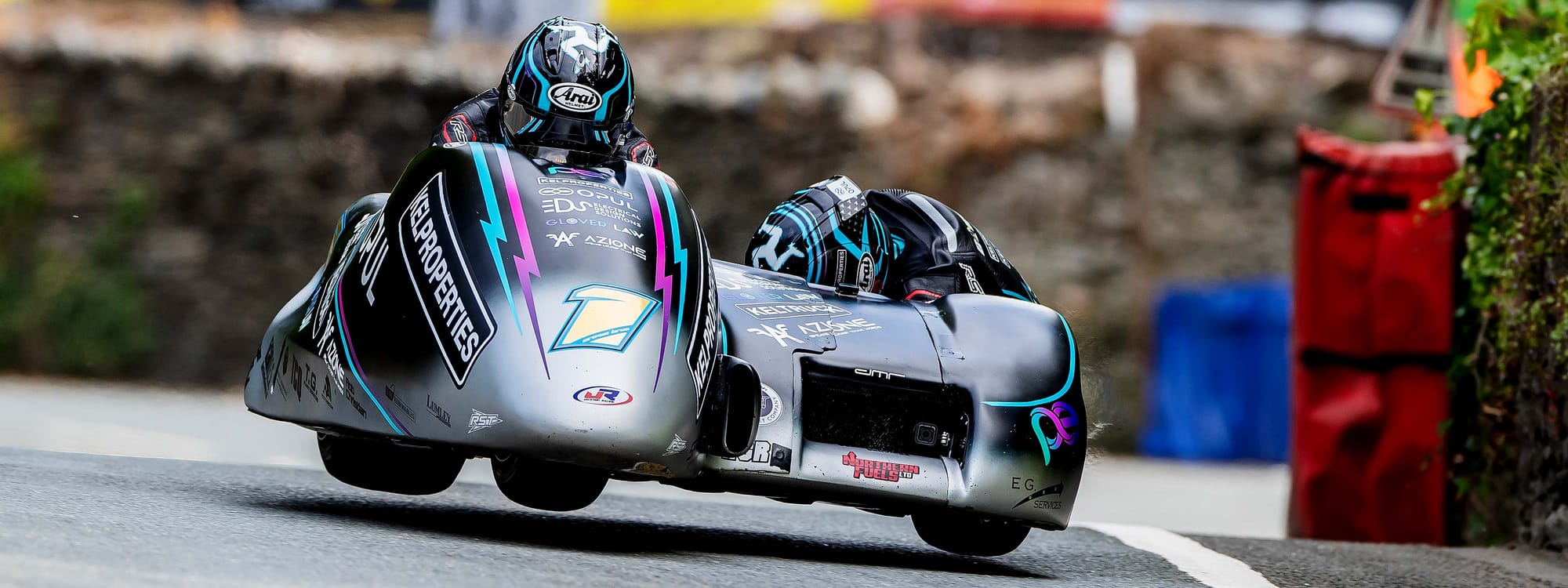
Anyone who has stood at the bottom of Bray Hill when a pair of Isle of Man TT sidecar racers plunges through the dip at 240 km/h knows that three-wheeled road racing is not a sport for the faint of heart, thin of wallet, or weak of conviction.
The Isle of Man TT Sidecar class has been thrown into an unprecedented technical crisis following the official release of the 2027–2029 regulations by ACU Events Ltd and the Isle of Man Department for Enterprise. While organizers suspended the three-wheelers during the 2026 event under the banner of a comprehensive “Sidecar Sustainability Review”, the resulting rulebook has triggered an immediate rebellion from leading teams, drivers, and chassis builders. By abruptly outlawing the screaming 600cc four-cylinder powerplants that have anchored the class for decades and mandating spec British Superbike (BSB) Sportbike parallel-twins and triples, organizers have delivered a financial and engineering shock that competitors warn could decimate the 2027 starting grid.
The 600cc Four Ban and Imposed Mectronik Electronics
The Isle of Man TT Sidecar regulations for 2027 officially ban all 600cc four-cylinder production engines, replacing them with production-derived twin and triple-cylinder powerplants aligned with BSB Sportbike technical rules. Platforms such as the Yamaha R7, Aprilia RS660, Kawasaki Ninja 650, and Triumph Daytona 660 will form the new powertrain backbone, governed under a strict Balance of Performance (BoP) formula managed by mandatory spec Mectronik electronic control units (ECUs) and standardized wiring looms.
To evaluate machinery durability and field pacing over the 60.7 km Snaefell Mountain Course, organizers have shortened the initial 2027 race distances from three laps down to two laps across both scheduled Sidecar encounters. Organizers argue that phasing out discontinued 600cc supersport engines aligns the TT with modern showroom catalogs and curbs dangerous high-rpm engine seizures. However, competitors argue that imposing spec electronics and rev-limit architectures top-down undermines the privateer engineering ethos that keeps road racing alive.
The Competitor Revolt: Team ARC and Privateers Push Back
The Isle of Man TT Sidecar paddock responded with immediate fury, headlined by a scathing public critique from TT podium finisher Lee Crawford and his front-running Team ARC outfit. Crawford revealed that while teams actively participated in the official review process, moving to BSB Sportbike engines paired with mandatory controlled electronics was neither explored as a proposed direction nor recommended by any active competitor during consultations.
Veteran campaigners including Gibson Racing and Isle of Man privateer stalwart Michael Russell echoed those concerns, pointing out that re-engineering a bespoke tubular racing outfit around an entirely different engine footprint requires between €25,000 and €35,000 per machine. Without a phased transition period allowing existing 600cc machinery to run alongside incoming twins, several established outfits have stated that the financial burden falls far outside their remit, leaving them with no choice but to boycott the 2027 event.
“To take away the 600cc engines without exploring a phased transition or listening to the competitors who actually risk their lives on the Mountain Course is devastating. Imposing BSB Sportbike engines and controlled electronics will not reduce costs for privateers—it will simply force dedicated teams out of the sport.” — Team ARC Official Paddock Statement
The Rider’s Trade-Off: Twin-Cylinder Torque vs Center of Gravity Packaging
The central engineering trade-off of the new Isle of Man TT Sidecar regulations lies in the packaging geometry of modern parallel-twin engines. While twin-cylinder engines deliver punchy, tractable mid-range torque when powering out of tight technical bends like Ramsey Hairpin and Parliament Square, their vertical architecture poses serious chassis headaches.
A modern parallel-twin engine sits considerably taller in the frame than a compact 600cc inline-four. In an F2 sidecar chassis where the passenger must scramble across the rear deck mere inches above the engine casing at 200 km/h, fitting a tall twin forces chassis builders to raise the top frame tubes and fuel cell. This elevates the overall center of gravity right where low-slung stability is critical, demanding expensive CAD redesigns, custom oil scavenge plumbing, and newly fabricated airboxes for frames that were engineered specifically around Japanese four-cylinder architecture.
Technical Shift: TT Sidecar Evolution
| Regulation Element | Outgoing F2 TT Specification | Imposed 2027–2029 TT Rules | Southern 100 F2 Rules |
|---|---|---|---|
| Permitted Engines | 600cc 4-Cylinder (CBR, GSX-R, R6) | BSB Sportbike Twins / Triples | 600cc 4-Cylinder & Sportbike |
| Eligible Powerplants | Honda CBR600RR, Suzuki GSX-R | Yamaha R7, RS660, Ninja 650 | 600cc Supersport production |
| Electronics Package | Open / Tuned Kit ECUs | Mandatory Spec Mectronik ECU | Open F2 homologated looms |
| Chassis Undertrays | Ground-effect aero fairings | Controlled flat-bottom rules | Aero undertrays banned |
| Scheduled Race Laps | 3 Laps (182.1 km total) | 2 Laps (121.4 km evaluation) | 6 to 8 short-circuit laps |
| Estimated Rebuild Cost | Baseline maintenance | €25,000 – €35,000 conversion | €0 (Chassis grandfathered) |
Grid Sustainability in Jeopardy Ahead of TT 2027
The standoff leaves TT organizers facing an uncomfortable dilemma as preparations for the 2027 festival accelerate. When officials previously revealed that Isle of Man TT Sidecars would return in 2027 with a new sportbike-based engine formula, the announcement was framed as a collaborative rescue mission for three-wheeled road racing. In contrast, nearby events have taken a more pragmatic route; as seen when F2 sidecars returned to the Southern 100 in 2027 with an aero undertray ban, the Billown course preserved existing 600cc hardware while focusing purely on mechanical floor aero.
With just 18 months remaining before machines roll onto Glencrutchery Road for first practice, ACU Events must decide whether to negotiate transition dispensations or risk staging a flagship TT Sidecar race with a single-digit field.
Media citation: Editorial outlets and forums may quote excerpts with attribution and a link to Throttle Times.
Reporting via: roadracingnews.co.uk, iomtoday.co.im, visordown.com, manxradio.com