Isle of Man TT Eases 2027 Sidecar Regulations Following Backlash
2-lap distance & grandfathered aero + Middleweight twin mandate stays firm while bodywork rules ease + TT organizers avoid a three-wheeled grid revolt.

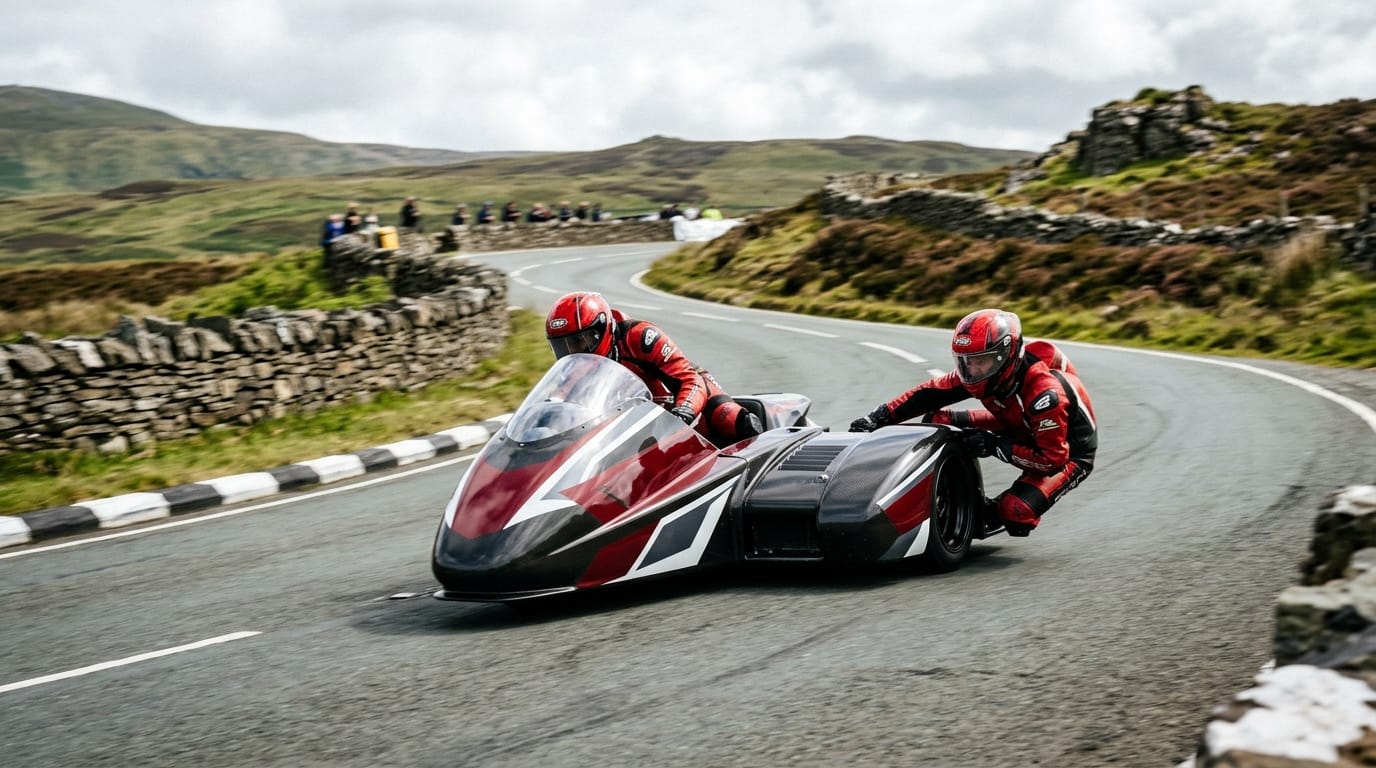
Isle of Man TT organizers have stepped in to defuse a looming grid crisis, issuing late-breaking relaxations to the technical regulations governing the 2027 Sidecar TT. Following intense pushback and high-profile withdrawals across the paddock—where leading outfits warned that a rigid implementation of the 2027 sidecar regulations sparked severe team backlash—race officials have granted crucial transitional exemptions for aerodynamic bodywork, fairing construction, fuel tanks, and fuel delivery systems.
The concessions come at a delicate moment for the three-wheeled discipline on the Mountain Course. Following the class’s absence in 2026, race organizers locked in a guaranteed three-year commitment (2027–2029) to restore sidecars to the island, alongside leadership transitions that saw long-time TT Clerk of the Course Gary Thompson step down. However, an abrupt mandate forcing teams to simultaneously abandon 600cc four-cylinders, master unfamiliar twin-cylinder powerplants, and redesign complex bespoke aero envelopes threatened to leave the 2027 grid dangerously under-subscribed.
The Core Mandate Unchanged: Twin-Cylinder Sportbike Engines and Spec ECUs
While bodywork rules have been softened, TT organizers have drawn an unyielding line in the sand regarding powertrains. The era of screamers revving past 15,000 rpm is definitively over; the class must transition entirely to production-derived parallel-twin and V-twin engines mirroring British Sportbike technical regulations—principally the Yamaha R7 (CP2), Aprilia RS660, and Kawasaki Ninja 650.
Furthermore, every machine on the Mountain Course will be tethered to a standardized Mectronik spec engine management system operating under a strict Balance of Performance (BoP) algorithm.
“The fundamental transition to middleweight twins and unified Mectronik control electronics is non-negotiable. It remains the essential engineering foundation required to cap terminal velocities over mountain crests and guarantee long-term technical sustainability. However, easing bodywork and fueling constraints provides privateers the breathing room necessary to build safe outfits without facing financial ruin.”
By temporarily freezing fairing and undertray dimensions, teams can adapt their existing F2 chassis platforms to accommodate twin-cylinder engine mounts without commissioning six-figure wind-tunnel programmes or custom autoclave tooling before the spring testing window opens.
| Regulatory Parameter | Relaxed 2027 Transitional Rule | Original 2027 Proposal | Legacy Pre-2026 Formula |
|---|---|---|---|
| Engine Architecture | Production Twin (R7, RS660, ER6) | Production Twin Only | 600cc 4-cyl / 675cc Triple |
| Engine Management | Mandatory Spec Mectronik ECU + BoP | Mandatory Spec Mectronik ECU + BoP | Open Kit ECUs / Manufacturer Loom |
| Fairings & Bodywork | Existing chassis aero grandfathered | Strict standardized spec aero envelope | Bespoke prototype carbon aero |
| Fuel Cell & Pumps | Existing certified tanks permitted | Mandated spec dry-break fuel system | Regulated FT3/FIA safety tanks |
| Race Distance | Two laps of Mountain Course (121.4 km) | Two laps (121.4 km) | Three laps (182.1 km) |
| Minimum Combined Mass | ~360 kg (bike + crew wet) | ~360 kg wet | ~345 kg wet |
| Estimated Outfit Build Cost | €45,000–€60,000 (~£38k–£50k) | €75,000–€95,000 (~£63k–£80k) | €55,000–€70,000 |
The Rider’s Trade-Off: Speed Management vs Crew Physicality
From an organizational and spectator standpoint, capping top speeds along Sulby Straight from 255 km/h down to roughly 225–230 km/h improves the survival envelope on narrow public roads lined with stone walls and telegraph poles. But for driver and passenger, the mechanical transition to high-torque twins alters the physical demands of racing an outfit:
- Torque Thump vs High-Rpm Fluidity: A screaming 600cc inline-four delivers linear, predictable power high in the rev range. A tuned 660cc or 700cc twin punches out immediate low-end torque pulses at corner exit, loading the rear Hoosier slick with sudden rotational stress. Drivers must recalibrate throttle roll-on to avoid snapping traction across greasy damp patches under the Glen Helen trees.
- Passenger Shifting Cadence: With a reduced two-lap race distance (121.4 km total), the event becomes an explosive sprint. The broader spread of twin-cylinder midrange eliminates rapid-fire gear shifts, but the heavier engine braking forces the passenger to brace harder against bulkhead stops under deceleration, demanding relentless core and forearm stamina.
What Happens Next: Paddock Entries and Scrutineering
The relaxation of bodywork regulations has already prompted reconsiderations among independent engine tuners and privateer crews who initially feared being priced out of the paddock. Organizers have confirmed that formal entries for the 2027 Sidecar TT will open under the updated technical handbook, with strict medical fitness screenings and confirmed circuit experience required before newcomers are granted Mountain Course start permissions.
By offering a sensible regulatory compromise, the TT ensures that when sidecars return to Glencrutchery Road in 2027, the iconic throb of twin-cylinder powerplants will be backed by a full, competitive grid of world-class road racers.
Media citation: Editorial outlets and forums may quote excerpts with attribution and a link to Throttle Times.
Official source: https://www.iomttraces.com/latest/news/2027-sidecar-tt-regulations-update/
Reporting via: motorcycle.com, crash.net