Pirelli Debuts Angel GT III: Soft-Handling Radial Cuts Steering Fatigue
Soft Handling carcass & full-silica dual compound + Acoustic rear tread curbs autobahn roar + Pirelli redesigns its flagship sport-touring radial for heavy 250 kg mile-munchers.

Anyone who has guided a 250 kg sport-tourer loaded with hard luggage over three consecutive Alpine passes in late-October drizzle knows the exact sensation when your shoulders stiffen and countersteering an unwilling front contact patch starts feeling like upper-body weight training.
The Pirelli Angel GT III arrives as the fourth generation of Pirelli’s flagship sport-touring radial line, succeeding the Angel ST, Angel GT, and Angel GT II. Scheduled to reach European dealer racks in early 2027, the new tire tackles the shifting realities of modern long-distance motorcycling. High-powered crossovers and heavyweight roadsters like the BMW R 1250 RS, Yamaha Tracer 9 GT, and KTM 1290 Super Duke GT demand sports-car braking stability combined with neutral, low-effort tip-in that doesn’t wear the rider out after an eight-hour stint across wet asphalt.
“Soft Handling” Architecture Cuts Countersteering Physical Effort
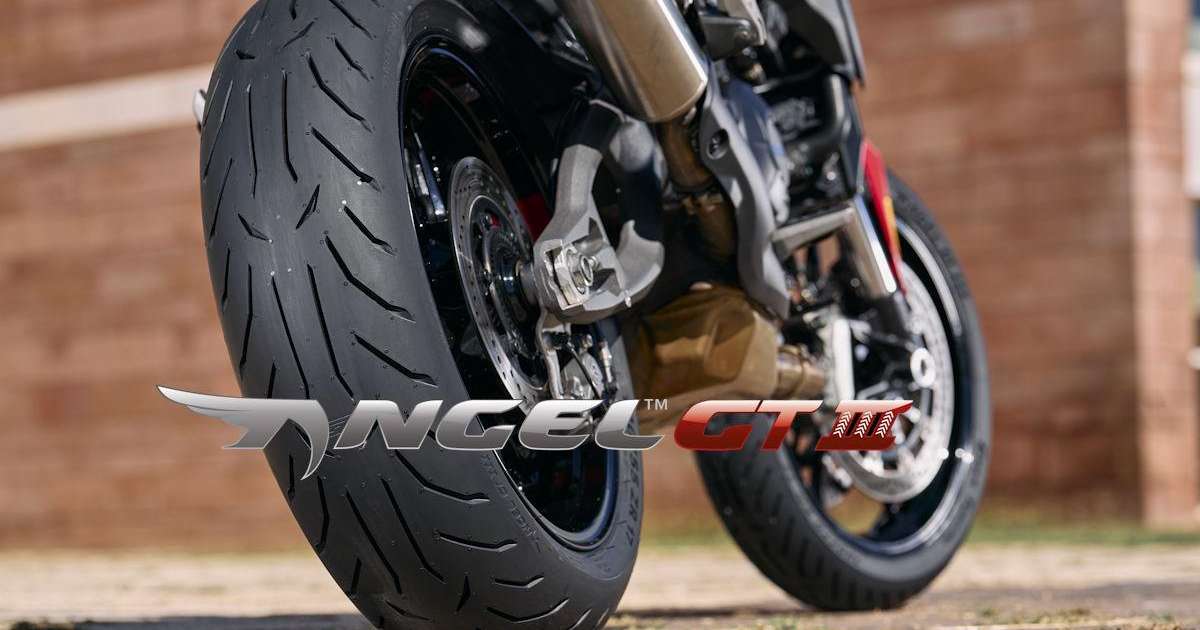
The Pirelli Angel GT III introduces Pirelli’s “Soft Handling” engineering philosophy, which retunes carcass cord tension and cross-sectional crown radii to significantly reduce initial steering effort when initiating turn-in. Rather than requiring aggressive bar pressure to roll off the center ridge onto the contact shoulders, the tire rolls progressively into a lean angle with minimal rider input.
This engineered compliance is specifically tailored for heavyweight modern machinery. By absorbing minor pavement corrugations within the carcass structure before they transfer into the handlebars, the tire reduces steering fatigue on long motorway liaisons while maintaining the sharp, predictable tracking that European road riders expect from the Italian manufacturer.
Full-Silica Chemistry Meets Acoustic Tread Groove Profiling
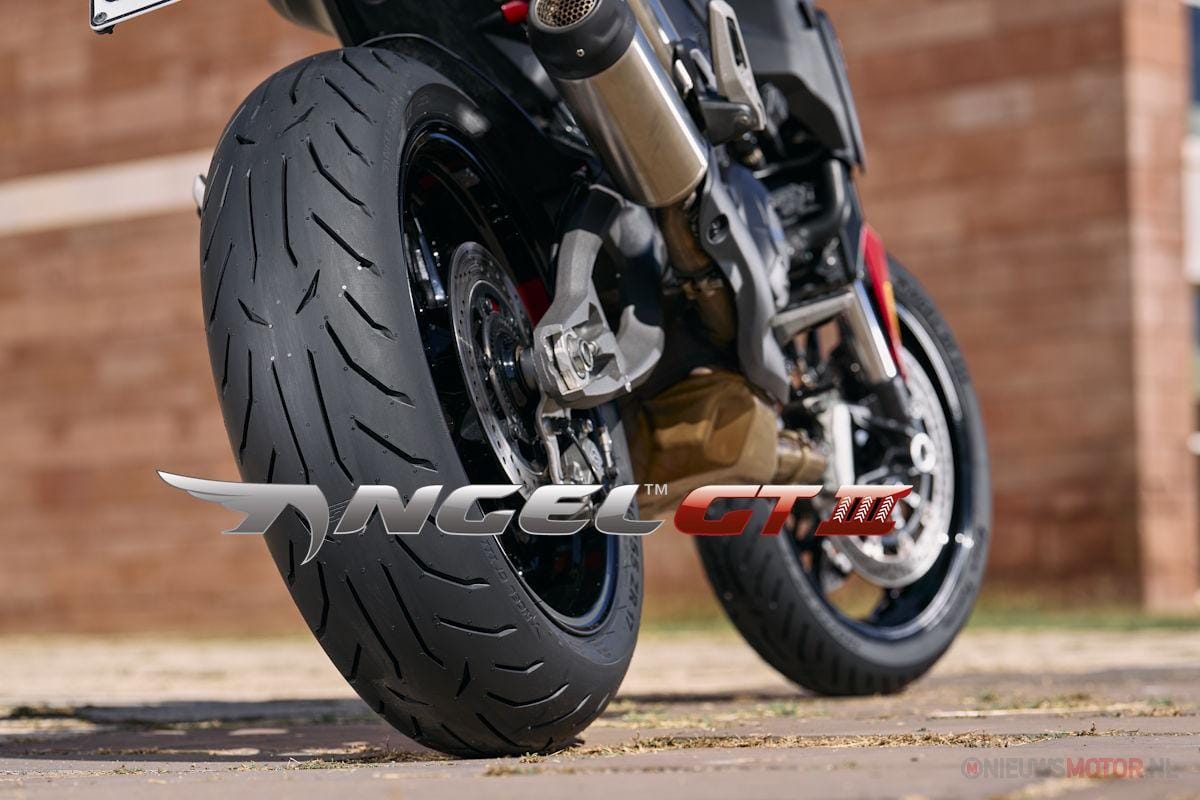
The Pirelli Angel GT III employs an advanced high-silica compound matrix across both front and rear tires, paired with a dual-compound rear construction that sandwiches a hard, wear-resistant central mileage band between high-grip 100% silica shoulder zones. The updated chemical formulation bonds with cold, moisture-slicked road surfaces at temperatures as low as 4°C, drastically shortening wet warm-up times and providing immediate grip when pulling away on greasy morning mountain switchbacks.
To enhance touring refinement over hundreds of highway kilometres, Pirelli completely redesigned the rear tread groove pattern and longitudinal siping. The staggered void layout disrupts acoustic resonance inside the tire cavity, substantially dampening rolling tire roar at cruising speeds between 120 and 140 km/h. Furthermore, the revised grooving resists the dreaded “squaring off” profile degradation that plagued older sport-touring radials, ensuring the tire maintains its neutral turn-in characteristics past 10,000 km of service.
“Modern sport-tourers have grown faster and heavier, yet riders rightly demand sports-bike agility when the road begins to twist. The Angel GT III delivers effortless steering transitions without sacrificing the wet-weather safety margins and mileage durability that define the Angel lineage.” — Pirelli Moto R&D Technical Brief
The Rider’s Trade-Off: Carcass Compliance vs Trackday Apex Stiffness
The technical compromise of the Pirelli Angel GT III centers on the trade-off between touring compliance and maximum trackday sidewall stiffness. In optimizing the carcass cord tension for “Soft Handling” on rough public asphalt, Pirelli has dialed out the ultra-rigid, uncompromising feedback found in dedicated hypersport rubber like the Diablo Rosso IV.
Riders pushing a heavyweight naked bike at maximum trackday pace on dry 30°C asphalt will notice slightly more tread block flex and subtle squirm under violent trail-braking into downhill hairpins. For everyday European riders clocking wet autumn miles, that carcass suppleness is an absolute blessing; for knee-down purists chasing lap times on sticky circuits, the softer carcass profile marks it clearly as an endurance touring tool rather than a trackday scalpel.
Performance Benchmark: Pirelli Angel GT III vs Rivals
| Specification | Pirelli Angel GT III | Pirelli Angel GT II (Predecessor) | Michelin Road 6 |
|---|---|---|---|
| Target Segment | Sport-Touring & Heavy Crossovers | Sport-Touring | Sport-Touring |
| Carcass Tech | Soft Handling tuned cord tension | Dual-ply Rayon carcass | 2CT+ with Radial X Evo |
| Front Compound | 100% High-Silica formulation | High-Silica | 100% Silica 2CT |
| Rear Compound | Dual-compound (Hard center / Soft shoulder) | Dual-compound (Cap & Base) | 2CT+ Dual-compound |
| Rolling Noise Delta | Redesigned acoustic groove resonance | Baseline | Standard siping |
| Wet Braking Temp Window | Down to ~4°C operating threshold | ~7°C operating threshold | Sub-freezing silica |
| Primary Sizes | 120/70 ZR17 (F), 180/55 & 190/55 (R) | 17-inch and 19-inch fitments | 17-inch, 18-inch, 19-inch |
| Est. European Pair Price | €340 – €380 | €290 – €330 | €360 – €410 |
Sizing Range and European Dealership Availability
The Pirelli Angel GT III is slated for European market arrival in the first quarter of 2027. Initial production will cover standard 17-inch front (120/70 ZR17) and rear sizes (160/60 ZR17, 180/55 ZR17, 190/50 ZR17, 190/55 ZR17), followed swiftly by 120/70 ZR19 and 170/60 ZR17 combinations to cater to popular tarmac-focused adventure machines like the BMW R 1300 GS and Ducati Multistrada V4.
For riders exploring technical tire alternatives, our previous reviews of dual-compound rubber like the Avon Trailrider 2 and budget-friendly radial updates like the Continental ContiMotion EVO underscore just how dramatically chemical silica formulation has transformed all-weather riding. With the Angel GT III, Pirelli reinforces that long-haul touring comfort doesn’t have to feel like wrestling a locomotive.
Expected retail pricing across Europe will range between €340 and €380 for a standard 120/70 and 180/55 tire pair.
Media citation: Editorial outlets and forums may quote excerpts with attribution and a link to Throttle Times.
Official product page: https://www.pirelli.com/tyres/en-ww/motorcycle/tyres/sheet/angel-gt-iii
Reporting via: superbike.co.uk, nieuwsmotor.nl