Royal Enfield Readies 250cc Platform: Project 'V' Targets 50 km/l
50 km/l target & sub-350cc architecture + All-new 250cc single with possible mild-hybrid torque assist + Chennai prepares to conquer the commuter step-up market.

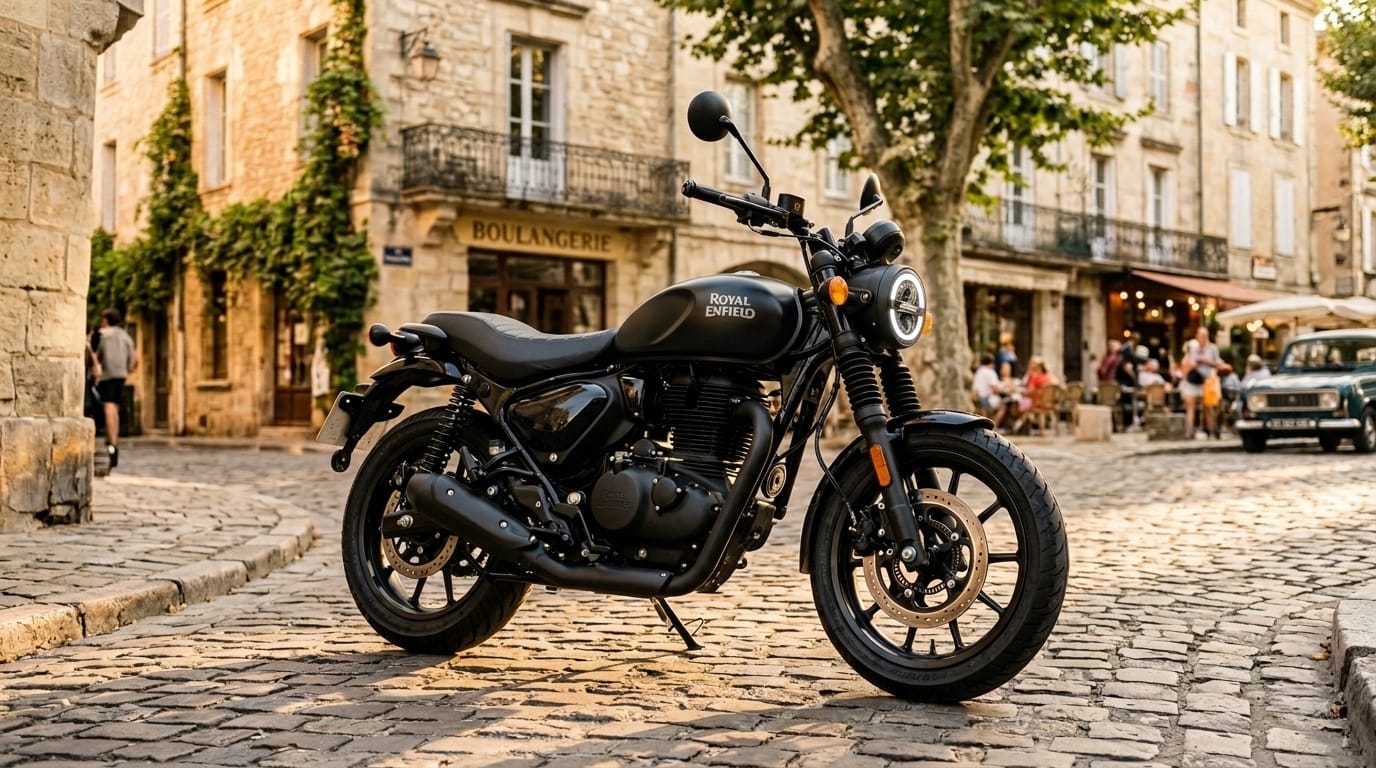
Royal Enfield appears to be preparing an aggressive downward expansion below its ubiquitous 350cc single-cylinder lineup, developing an all-new quarter-litre architecture aimed directly at lightweight urban mobility and emerging market upgraders. Internally designated as Project ‘V’, the upcoming platform centers on a bespoke 250cc single-cylinder powerplant engineered to deliver ultra-accessible seat heights, accessible curb weight, and exceptional fuel efficiency exceeding 50 km/l (under 2.0 L/100 km).
While Chennai’s modern juggernaut has dominated mid-capacity motorcycling—cemented by record quarterly sales figures and backed across Europe by initiatives like Royal Enfield’s 10-year UK warranty scheme—the brand has historically left the sub-300cc space entirely to commuter incumbents. Project ‘V’ marks a strategic pivot to catch younger, aspirational riders stepping off basic 125cc to 160cc runabouts before Japanese or domestic rivals lock them into sportier lightweight roadsters.
The Mechanical Reality: 250cc Architecture and Mild-Hybrid Exploration
The new 250cc engine is not merely a down-sleeved J-series 349cc unit, which would carry excessive crankcase mass for a lightweight entry-level roadster. Instead, engineering disclosures indicate a newly developed, compact air/oil-cooled architecture optimized for low-friction operation, reduced reciprocal mass, and relaxed urban torque rather than peak high-rpm horsepower.
“The step-up segment between commuter transport and characterful leisure riding represents the fastest-growing demographic in Asian and Latin American markets. Project ‘V’ is designed to establish an emotional, accessible ownership entry point without compromising classic design cues.”
Most intriguingly, sources close to Chennai’s R&D operations indicate Royal Enfield is evaluating integrated starter-generator (ISG) mild-hybrid architecture for the platform. By pairing a 48V belt-driven or crank-integrated motor-generator with automatic start-stop and low-speed torque assist, the 250cc single could smooth out stop-start urban traffic while maintaining compliance with tightening Euro 5+ and global fuel-economy benchmarks.
| Technical Parameter | Royal Enfield Project ‘V’ (Est.) | Royal Enfield Hunter 350 | Hero Mavrick 440 |
|---|---|---|---|
| Engine Displacement | ~249 cc single-cylinder | 349 cc J-series single | 440 cc air/oil-cooled single |
| Valvetrain / Cooling | SOHC, 2-valve, Air/Oil-cooled | SOHC, 2-valve, Air/Oil-cooled | SOHC, 2-valve, Air/Oil-cooled |
| Target Power Output | 18–20 bhp @ 7,500 rpm | 20.2 bhp @ 6,100 rpm | 27 bhp @ 6,000 rpm |
| Peak Torque | 21–23 Nm @ 4,500 rpm | 27 Nm @ 4,000 rpm | 36 Nm @ 4,000 rpm |
| Fuel Economy Target | > 50 km/l (< 2.0 L/100 km) | ~36 km/l (2.8 L/100 km) | ~30 km/l (3.3 L/100 km) |
| Target Kerb Weight | 158–165 kg wet | 181 kg wet | 187 kg wet |
| Target EU / Global Pricing | €3,400–€3,800 (~₹1.8–2.0 Lakh) | €4,490 OTR | N/A (Non-EU) |
The Rider’s Trade-Off: Mass Reduction vs Highway Reserve
For European urban riders and commuter purists, a 160 kg Royal Enfield with classic proportions sounds like an ideal city scrambler. However, the mechanical compromise lies in cruising reserves. Dropping displacement to 250cc inevitably truncates sustained highway velocity:
- A-Road and Motorway Headroom: Where the 350cc J-platform can sit comfortably at 100 km/h with enough flywheel momentum to resist headwinds, an 18–20 bhp 250cc thumper will run near its upper rev limits beyond 110 km/h. Overtaking on European dual-carriageways will require methodical planning and gearbox stirring.
- Flywheel Inertia vs Agile Turn-In: Traditional Royal Enfield charm stems from heavy crankshaft inertia and an unhurried, rhythmic thrum. Shaving internal mass to hit 50 km/l fuel targets yields a revvier character that responds crisply in traffic, but sacrifices the relaxed, tractor-like cadence that defines machines like the 2027 Royal Enfield Interceptor 650.
What We Know / What’s Still Unclear
What We Know: - Dedicated Project Code: The motorcycle is tracked under internal development code ‘Project V’. - Displacement Bracket: Engineered around a 249cc single-cylinder architecture slotting cleanly beneath the 349cc J-series and upcoming 750cc twins. - Efficiency Target: Fuel economy mapped to surpass 50 km/l, positioning it as Royal Enfield’s greenest internal combustion motorcycle. - Target Audience: Aspirational urban commuters and novice riders stepping up from 125cc motorcycles.
What’s Still Unclear: - Hybrid Production Intent: Whether the mild-hybrid torque-assist tech will debut on the base production model or arrive as a premium variant. - European Homologation: Whether Chennai will export the 250cc model to EU/UK dealers as a sub-€4,000 A2 entry model alongside the Hunter 350, or restrict it primarily to Asian and Latin American markets. - Chassis Architecture: Whether it adopts a lightweight tubular steel spine or borrows a modular chassis layout from the Hunter platform. - Firm Release Window: Current internal milestones target commercial launch in late FY2027 to FY2028.
Media citation: Editorial outlets and forums may quote excerpts with attribution and a link to Throttle Times.
Reporting via: auto.economictimes.indiatimes.com, timesnownews.com