The Isle of Man TT's Sidecars Might Come Back in 2027, Just Not the Way I Remember Them
The review that grounded Sidecars for the rest of TT 2026 just published its verdict: yes to 2027, but only with less power, tighter aero, and a lot more scrutineering.
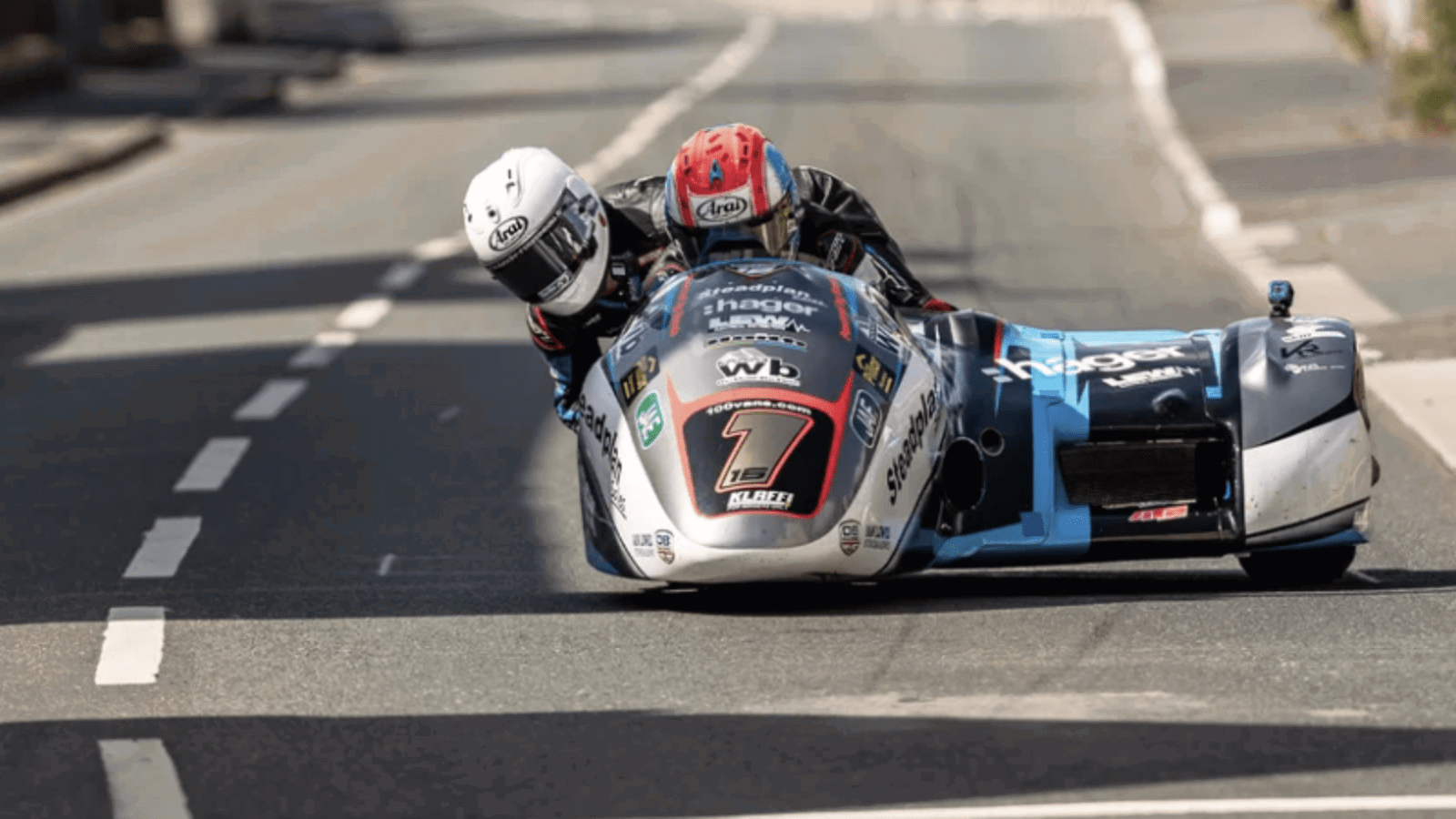
The Isle of Man TT’s Sidecar Sustainability Review has published its first-stage report, and the headline finding is that Sidecars can come back for 2027 – but not as they were. The class was suspended for the rest of TT 2026 after two serious qualifying incidents, and the review’s own words are blunt about what has to change: “The objective is not to build the fastest Sidecar class possible. It is to build the most sustainable Sidecar class possible.” I’ve spent more Tuesday evenings than I’d like to admit watching Birchall onboard laps, so I read the whole thing, aside included.
Why the class was pulled from TT 2026
Sidecars were suspended for the rest of this year’s TT after two serious qualifying crashes: Maria Costello and Shaun Parker went down hard at Brandish, with Costello sustaining spinal injuries, and Ryan and Callum Crowe suffered a high-speed, airborne flip at Crosby that left both with broken bones. The review flags a pattern with a 2025 incident involving Peter Founds and Jevan Walmsley at Rhencullen. The report says there’s no single proven technical cause, but points to aerodynamics and bodywork as the leading concern.
That’s not a small claim, and it comes with a genuinely interesting bit of racing history behind it. When the class capped engine capacity back in 1990, lap speeds kept climbing anyway – from 100 mph (Dave Saville, 1990) to 121.021 mph (Ryan and Callum Crowe, 2025) – because engineers just redirected their development budget into aerodynamics and chassis instead. Even this year’s 27.5mm intake restrictor barely dented pace: the Crowes still ran 118.224 mph on opening night. Squeeze the engine and the aero gets worse, not better – which is exactly why the review isn’t proposing a power cut on its own.
What actually changes for 2027
The review process gathered 472 public submissions (465 of them substantive) plus dedicated competitor, technical, and organisational panels, and the proposed package covers a lot more ground than horsepower:
| Area | Proposed change |
|---|---|
| Power | Target 95-100 hp (down from 120+ hp today) via a control ECU, intake restrictor, or rev limiter |
| Gearing | Controls to enforce a speed ceiling, not just an engine cap |
| Weight/stability | New minimum weight and stability requirements |
| Bodywork | Tighter dimension controls; restrictions on flat/enclosed floors that generate lift |
| Safety | Enhanced fluid containment, better marshal/medical access |
| Oversight | Chassis inspection and repair certification, documented outfit history, tougher scrutineering |
There’s also a research programme – CAD modelling, aerodynamic simulation, and vehicle-dynamics testing specific to the TT’s actual bumps, crests, and crosswinds, rather than generic track data.
The timeline back to the mountain course
| When | What happens |
|---|---|
| August 2026 | Technical Development Group formulates the initial package |
| September-October 2026 | Consultation and technical appraisal |
| Autumn 2026 | Final decision on 2027 viability |
| End of November 2026 | Regulations ideally published |
| April 2027 | Final readiness assessment |
That gives teams roughly six months, once the regulations land, to modify or build machinery before anyone gets a final green light. Nothing here is a guaranteed 2027 return – it’s a roadmap with a decision point built into it, and the report is careful to say so.
It’s been a big few days for two-wheeled and three-wheeled racing news out of Europe – Manuel Lettenbichler just wrapped up a record-equalling seventh Red Bull Romaniacs win on the other end of the continent, which is the kind of week that makes we wish I had more than one TV in the garage. On the safety side of things, it’s also worth noting how much crash-detection tech has crept into consumer gear lately – Quin’s helmet-mounted crash sensor is a world away from an ECU-limited race outfit, but it’s the same underlying instinct: catch the thing that goes wrong before it gets worse.
FAQ
Will Sidecars return to the Isle of Man TT in 2027?
Not confirmed yet. The Sidecar Sustainability Review’s first-stage report lays out a roadmap toward a 2027 return, with a final viability decision expected in autumn 2026 and regulations targeted for end of November 2026.
Why was the Sidecar class suspended for the rest of TT 2026?
Two serious qualifying crashes – Maria Costello and Shaun Parker at Brandish, and Ryan and Callum Crowe at Crosby – both resulted in serious injuries, echoing a similar 2025 incident at Rhencullen.
What technical changes are being proposed?
A power target of 95-100 hp (down from over 120 hp today) via a control ECU, intake restrictor, or rev limiter, plus gearing controls, new weight and stability minimums, tighter bodywork rules, and stricter chassis inspection and scrutineering.
Why not just cut engine power and leave it there?
The review points to history: after the 1990 capacity cap, lap speeds kept rising anyway as teams redirected development into aerodynamics and chassis. Even this year’s intake restrictor barely slowed the Crowe brothers down, which is why the 2027 package targets aero and bodywork alongside power.