ECE 22.06 Explained, and Why My Own Helmet Might Already Be a Museum Piece
The chin bar, the sticker, and the rotational-impact test nobody explains properly -- here's what ECE 22.06 changed, and why plenty of helmets on shelves are still running the old one.
I’ve got three helmets hanging in the garage right now, bought about four years apart, and until I actually went and checked the stickers I couldn’t have told you which two share a certification and which one is a genuinely different piece of engineering. If you’re in the same spot: ECE 22.06 is the homologation standard that replaced ECE 22.05 for almost every helmet legally sold for road use across the EU, the UK and a long list of other countries, and the single biggest thing it added is a test for the twisting, rotational hit that plain drop tests never measured. There’s also a real chance the “new” helmet on a shop’s end-of-line rack is still wearing the old sticker.
The test 22.05 never ran: what happens when your head doesn’t stop in a straight line
ECE 22.05 tested a helmet the way most people picture a helmet test: drop it, straight down, onto an anvil, and measure how much the impact is cushioned. What it never tested is what actually happens in most real crashes — a glancing, oblique hit that doesn’t just compress the liner, it twists the head on the neck. That twisting motion, not the straight-line thump, is a major driver of concussion and traumatic brain injury, and 22.05 had no way to fail a helmet for being bad at it.
ECE 22.06 fixes that with a dedicated oblique-impact test: the helmet is dropped onto an anvil angled 15 degrees from vertical, faced in coarse 80-grit aluminium-oxide sandpaper to grip the shell instead of letting it slide, and the rotational acceleration transmitted to the headform is scored against a Brain Injury Criterion (BrIC) ceiling of 10,400 rad/s². Fail that number and the helmet fails type approval, full stop, regardless of how well it did on the old straight-drop test.
ECE 22.05 vs ECE 22.06, side by side
| ECE 22.05 | ECE 22.06 | |
|---|---|---|
| Adopted | Long-standing baseline, in force since the early 2000s | 06 series of amendments, adopted 2020 |
| Impact points tested | A narrower set, essentially one main speed | Up to 18 points, including one on the chin guard |
| Test speeds (linear drop) | Single main speed | Three speeds: 6.0, 7.5 and 8.2 m/s |
| Rotational/oblique impact test | None | Yes — 15° angled anvil, BrIC ≤ 10,400 rad/s² |
| Visors and sun peaks | Not part of type approval | Tested as fitted, optics and impact resistance |
| Modular (flip-up) helmets | Certified closed-position only | Rated J / P / P-J / NP for both positions |
| Mandatory for new type-approvals | Superseded | Since roughly 2024 |
Visors and sun peaks finally get tested as part of the helmet
Under 22.05, the visor was effectively along for the ride — the shell and liner got certified, and what you clipped onto the front of it was your own business. 22.06 pulls the visor and any integrated sun shield into the actual type-approval process: optical distortion, scratch and impact resistance, and how it behaves when it’s fitted, not tested loose on a bench. It’s a quieter change than the rotational-impact test, but it’s the reason a modern helmet’s visor and shell are increasingly sold and certified as one unit rather than a shell plus an accessory.
Modular helmets finally get a rating that actually means something
This is the one that trips people up at the till. Under 22.05, a flip-up “modular” helmet only ever got tested with the chin bar down, in its full-face configuration — ride it chin-bar-up and you were, strictly speaking, outside what the certification had verified. 22.06 tests both positions and hands out one of four ratings: J (passes as an open/jet helmet only), P (passes closed, full-face, only), P/J (passes both configurations — the one you want if you actually ride with the chin bar up), or NP, which means it failed the open-position test and has no business being ridden that way in anything but a very literal sense. The chin bar itself also gets a downward load test in both standards, checking it won’t fold onto your face in a crash — 22.06 just finally checks the whole helmet the way people actually use it.
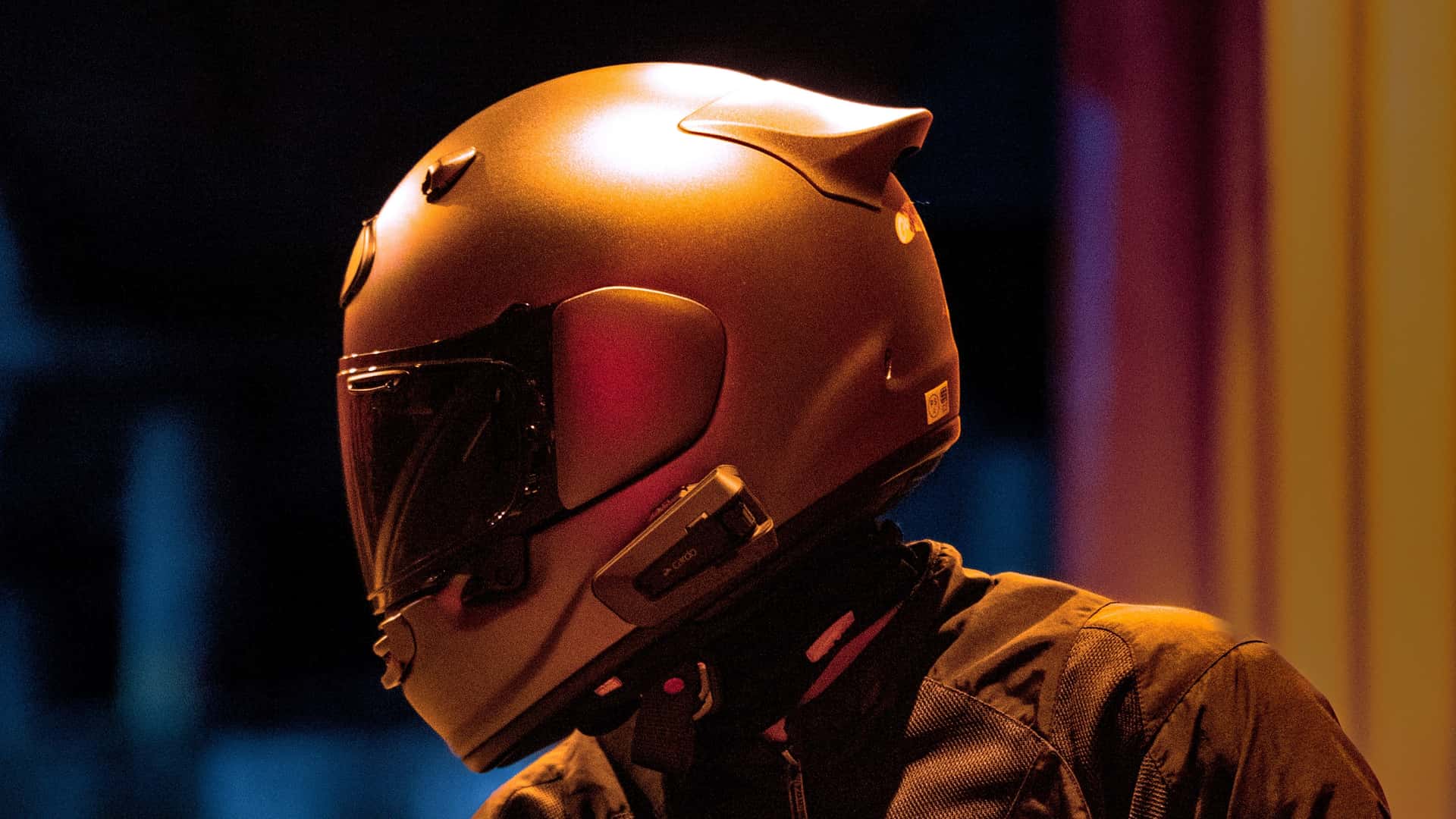
Not everything wearing a helmet shell needs any of this in the first place. Cardo’s Venture mesh comms unit lives inside a Leatt Moto 8.5 motocross shell, and pure off-road helmets like that are generally never put through ECE R22 type-approval at all — the regulation only governs helmets used on the public road, so a lid that never leaves a motocross track doesn’t need the sticker at all.
When 22.06 became mandatory, and why your old lid isn’t suddenly illegal
The 06 series of amendments was adopted in 2020, but regulations like this always carry a transition window rather than an overnight switch. New helmet models needed 22.06 type-approval well before manufacturers were forced to stop producing helmets under the older 22.05 approval, and by around 2024 the industry had largely finished the changeover — new helmets reaching EU and UK shelves today are, with rare exception, 22.06-approved.
None of that makes a helmet you already own illegal to wear. The requirement bites at the point of new type-approval and new sale, not at the point of use — there’s no expiry date stamped into the foam. That’s a different situation from an actual recall, which is a helmet failing testing after the fact rather than simply carrying an older-series approval: a half-helmet recalled by its manufacturer this year for failing basic impact protection outright is the urgent kind, and that’s a different problem entirely from a helmet that’s merely a few years behind on which series of the regulation it was certified against.
How to read the sticker riveted inside your own helmet
Every ECE-approved helmet has a small oval sticker riveted to the retention strap, not printed inside the liner where it’ll wear off. Inside the oval “E” mark sits a number identifying the approving country, and below or beside it a code that reads something like “022506” — the “22” is the regulation number, and “06” is the series of amendments, i.e. this is a 22.06 helmet. An older “022505” sticker means exactly what it looks like. For a modular helmet, the J / P / P-J / NP letter from the section above gets appended to that same approval code, so the sticker alone tells you both which series it was tested under and, if it flips up, which positions that testing actually covers.
Which helmets on the shelf right now are still running 22.05
By 2026 this is mostly a clearance-rack question rather than a mainstream one — the changeover finished a couple of years back, and current-generation helmets from every major brand are built and sold on 22.06 approval. Where you’ll still occasionally find a genuine 22.05 sticker is on older, unsold stock of helmets whose 22.06-approved successor has already launched, or on a helmet that simply hasn’t been refreshed since before the changeover.
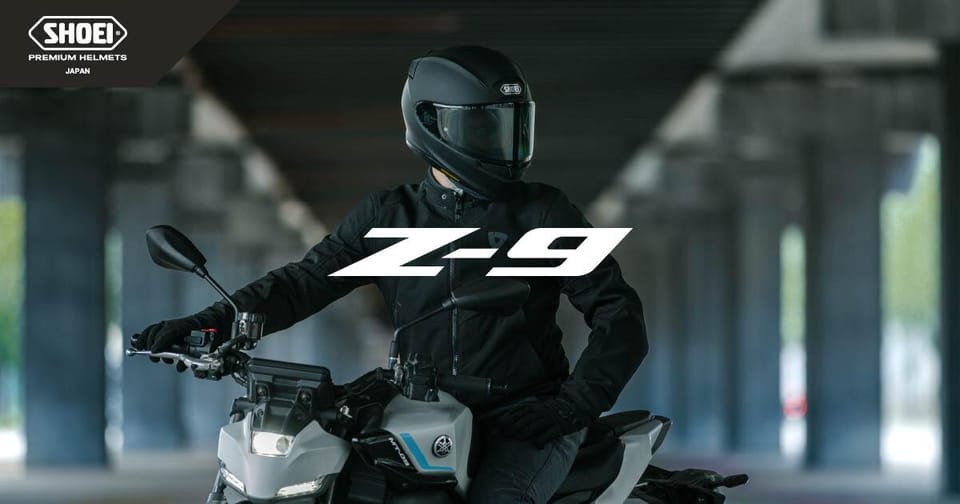
It’s also worth knowing that “new” and “22.06-approved in Europe” aren’t always the same event. Shoei’s new Z-9 launched in Japan first, on that market’s own JIS approval — Japanese manufacturers regularly bring a helmet to their home market before the ECE-homologated version aimed at Europe follows, sometimes months later. A helmet being brand new doesn’t automatically mean it’s wearing a fresh 22.06 sticker on day one in an EU showroom.
Where the rotational-impact test has visibly changed how helmets are built rather than just how they’re rated, AGV’s new Pista GP R3 is as literal an example as it gets — a liner built from roughly 1,600 tiny spheres designed to roll rather than shear under a glancing hit, which is close to a direct engineering answer to what the BrIC test is actually measuring.
FAQ
Is it illegal to keep riding in an ECE 22.05 helmet?
No. The 22.06 requirement applies to new type-approvals and new sales, not to helmets already in use — there’s no legal expiry date on an older approval, only a point at which manufacturers stopped being allowed to build new ones under it.
How do I check whether my own helmet is 22.05 or 22.06?
Look at the oval homologation sticker riveted to the retention strap. It shows an “E” inside a circle with a country code, and a code such as “022506” (22.06) or “022505” (22.05) — the last two digits are the series of amendments.
Does ECE 22.06 apply outside the EU?
Yes, in the sense that it’s a UN regulation, not an EU-only rule. It’s used across roughly 50 UNECE contracting countries, including the UK, well beyond the EU itself, though markets like the US run their own separate DOT/Snell systems in parallel.
Is a 22.06 helmet actually safer, or just tested differently?
Both, really — it’s tested against a failure mode, oblique impacts causing rotational acceleration, that the old standard didn’t check for at all, so a helmet has to survive a kind of hit that plenty of older-certified helmets were never required to handle.
Official product page: https://unece.org/media/press/399547
Reporting via: rideapart.com, sena.com, bikerrated.com