CFMoto, Kove, QJMotor, and Voge: The Chinese Motorcycle Brands Actually Worth Taking Seriously in 2026
Four Chinese brands, four different strategies -- one builds KTM's engines, one races Dakar, one just showed up, and one has been building BMW's own engines since 2007. Here's what each one actually gets you in Europe right now.
CFMoto, Kove, QJMotor, and Voge are the four Chinese motorcycle brands worth actually paying attention to in Europe right now — not because they’re cheap knock-offs anymore, but because CFMoto builds engines under licence from KTM, Kove runs a factory Dakar team that’s beaten everyone except KTM to the finish line, and Voge’s parent company has been building BMW’s own engines since 2007. Between them they cover everything from a €5,995 A2-legal adventure bike to a 112 hp ADV twin undercutting its European rivals by thousands of euros.
I’ve spent enough evenings falling down spec-sheet rabbit holes on all four that my wife now assumes any tab labelled “moto” is a Chinese import. She’s usually right. Here’s what each one actually is, what it’s actually good for, and where the real risk still sits.
The quick comparison
| Brand | Parent company | EU status (2026) | Flagship in Europe | Starting price |
|---|---|---|---|---|
| CFMoto | Publicly listed (Zhejiang) | Established — own dealer network since mid-2025 | 1000MT-X (Ibex 950 in the US) | €10,490 |
| Kove | Privately held | Established — factory Dakar team, growing dealer base | 800X Pro / Rally | ~€11,000–13,449 |
| QJMotor | Qianjiang Motorcycle Group (Geely is largest shareholder) | Just arriving — autumn 2025 continental push | Benda LFC700 (2026, pricing tbc) | UK entry models from ~£2,000 (125cc) |
| Voge | Loncin Motor | Established — dedicated importers in most Western EU markets | DS800X Rally | €8,999 (+ €370 delivery, DE) |
Estimates are marked as such below; treat anything without a hard source as a starting point for your own dealer conversation, not a quote.
CFMoto — the one already outselling legacy brands in some markets
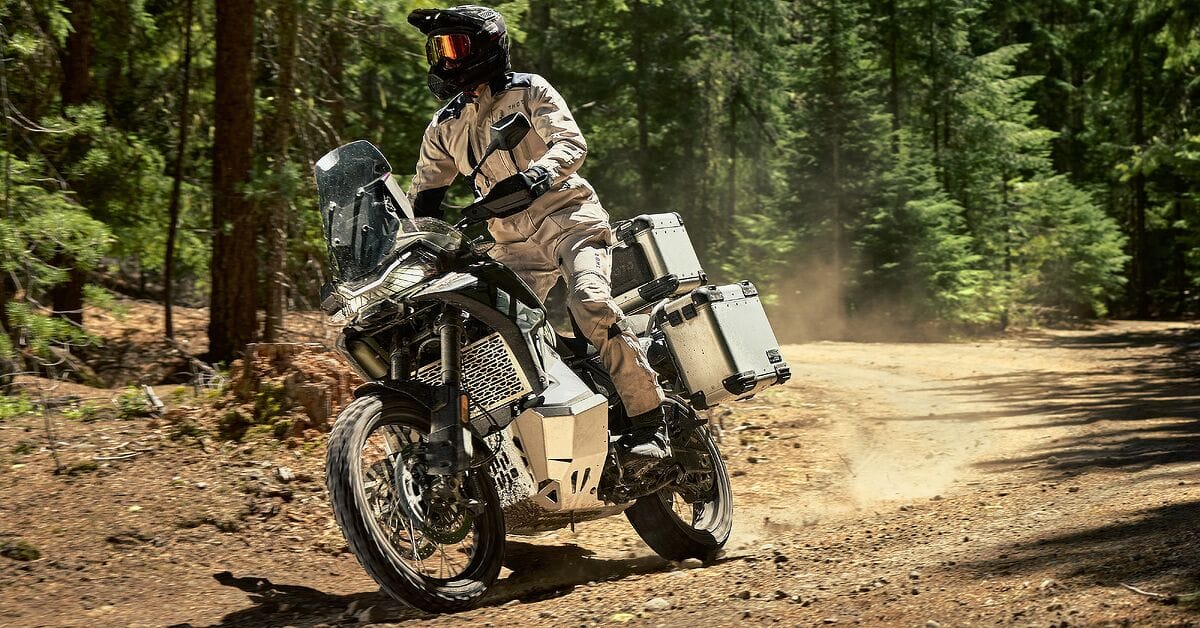
CFMoto is the brand furthest along, and the numbers back that up: it’s reportedly overtaken Ducati, KTM, and Suzuki in French registrations in 2026. Its EU flagship adventure bike, the 1000MT-X, starts at €10,490 for a 946cc parallel twin making 112 hp — built on the LC8c platform CFMoto manufactures under licence from KTM.
That KTM relationship is the thing everyone name-drops and almost nobody gets right. It’s a joint manufacturing and engineering venture dating to 2017, not an ownership stake in either direction — CFMoto builds engines to KTM’s standards and keeps its own product roadmap. The relationship got messier in 2025: KTM’s own financial troubles led it to hand back the distribution business it had been running for CFMoto across Germany, Austria, Switzerland, the UK, and Spain, effective 31 May 2025. CFMoto built its own dealer network in response, and by all accounts 2026 parts lead times in Western Europe are shorter for it, not longer. The engineering side of the partnership — the engines — is unaffected.
The other CFMoto story worth knowing: its 800MT-ES brought electronically adjustable suspension to a sub-€12,000 adventure bike, a feature that cost several thousand euros more on anything else with the option two years ago. If you want the full spec breakdown, CFMoto’s Ibex 950 launch covers the US version of the same bike, and the Dual 250 shows CFMoto isn’t only playing at the big-bore end — €2,990 gets you into the brand at A2-licence size too.
Kove — the one racing Dakar, not just building spec sheets
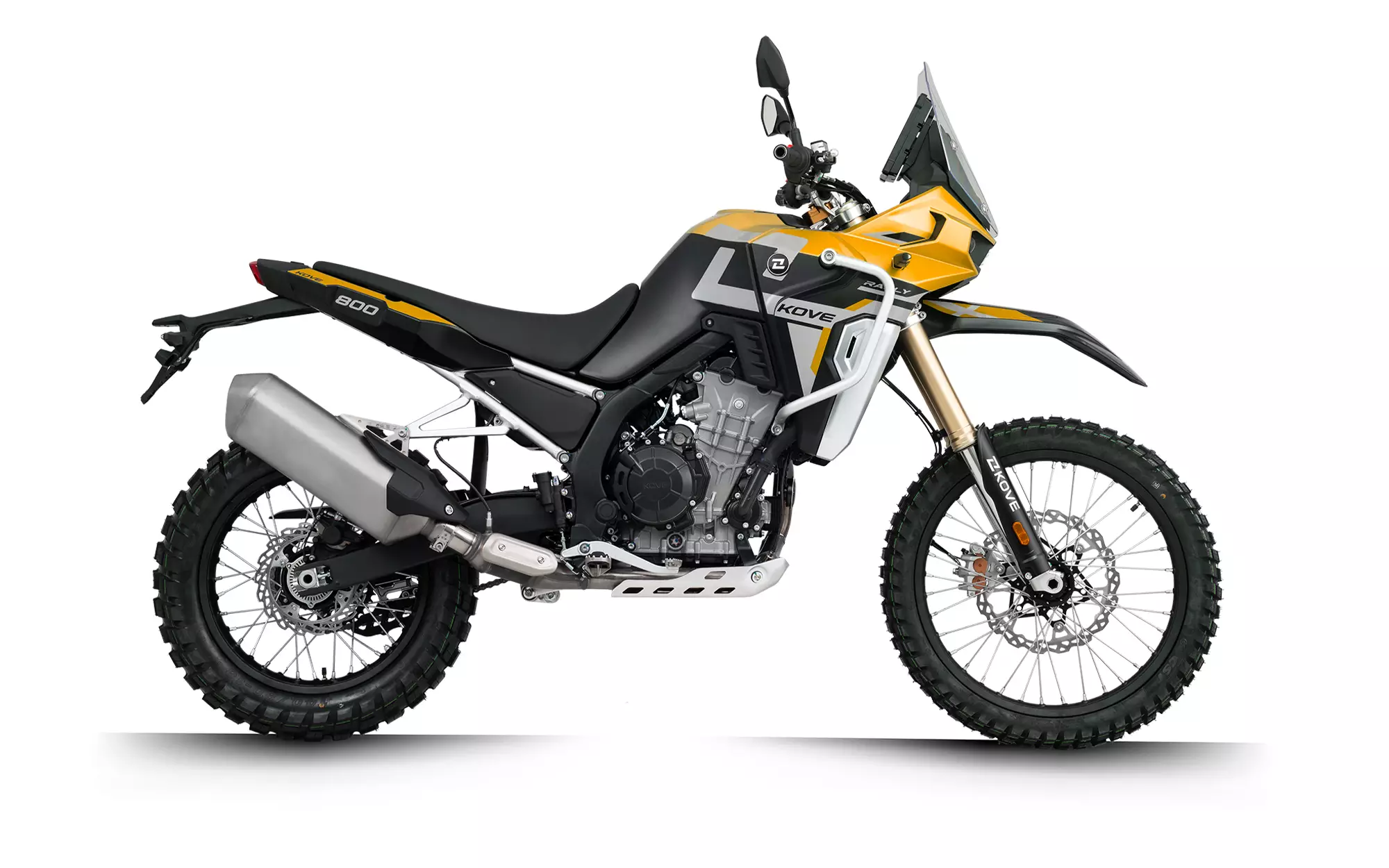
Kove entered its first Dakar Rally with a three-bike factory effort and got all three to the finish — a debut result most established manufacturers would be pleased with. It’s since grown into the second-largest team at the event behind only KTM, and its 450 RALLY EX became the first Kove machine, and the first from any Chinese manufacturer, to win a stage. That’s not marketing copy; that’s a podium sheet.
The road-going range built on that reputation is the 800X family: the 800X Pro (95 hp, 799cc parallel twin, a kerb weight several kilos lighter than most of its Japanese and European rivals), the long-travel 800X Rally, and the touring-oriented 800X Touring. Dutch pricing puts the 800X Pro at roughly €13,449, in line with mainstream 800cc-class ADV bikes rather than discount territory. Kove has also confirmed a factory MXGP team for 2027, which says the same thing about its motocross ambitions that the Dakar programme says about rally — this isn’t a brand planning to compete on price alone forever. Kove’s 660X, the newest addition below the 800X, fills the gap Kove clearly thinks the segment needs filled.
QJMotor — the one that just started showing up
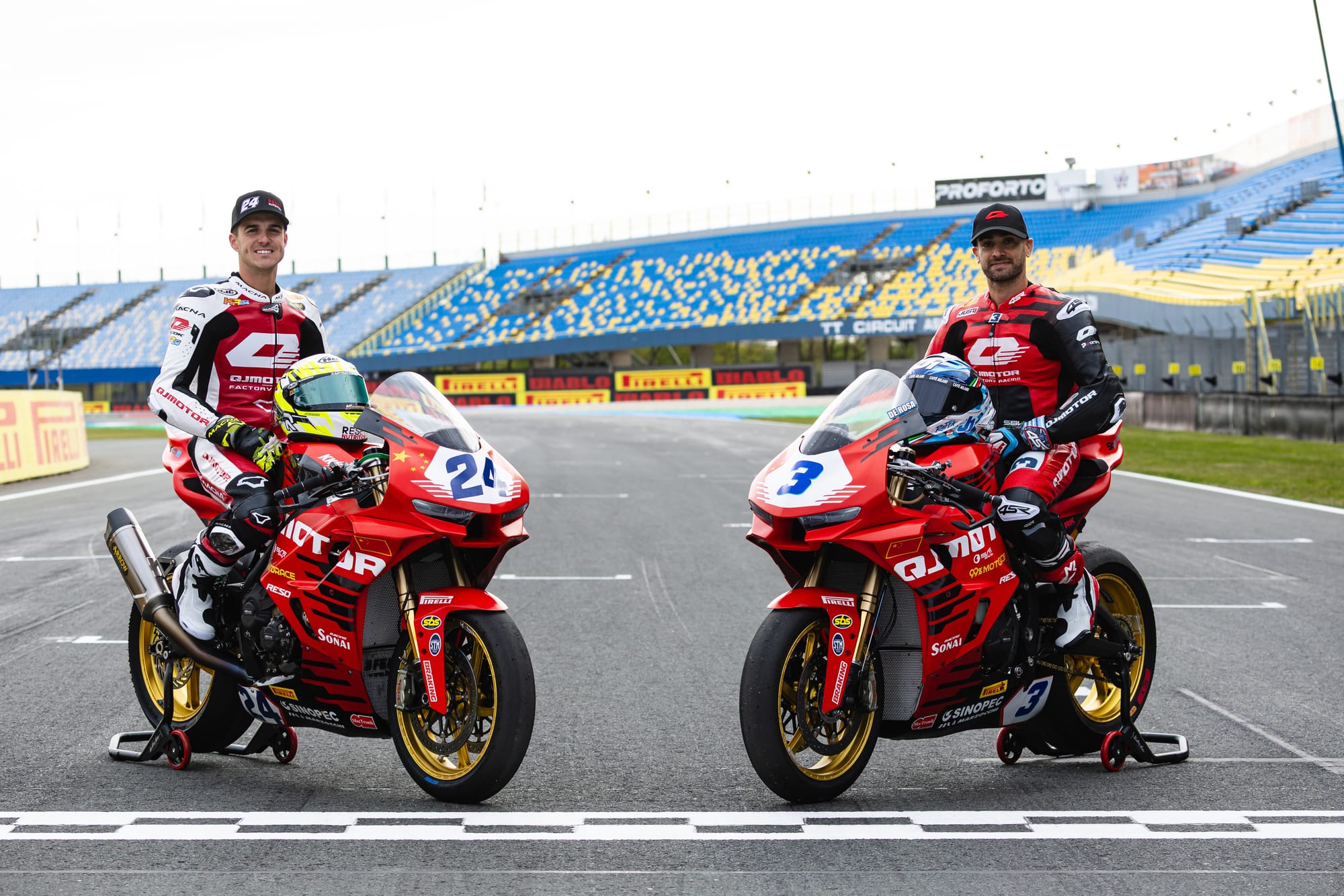
QJMotor is the newest of the four to Europe in any real volume, and it’s also the one with the most complicated family tree. It’s the badge Qianjiang Motorcycle Group sells under its own name (as opposed to Benelli, which Qianjiang also owns) — and Qianjiang itself has had Chinese auto giant Geely as its largest shareholder since 2016. QJMOTOR Factory Racing also runs its own competition programme, so the badge isn’t purely a domestic-market naming exercise.
The continental push started in autumn 2025: an initial six models, a plan to expand to around sixteen, and roughly 20 dealers signed up to sell them. The UK got there slightly earlier through its own importer, currently listing small-displacement models like the SRK 125 and SRV 125 rather than anything flagship-sized. The bike to watch is the 2026 Benda LFC700 — a 677cc liquid-cooled inline-four making 85 hp at 10,300 rpm, a genuinely unusual engine layout at this price point — though European pricing for it hadn’t been announced as I wrote this. Rough industry estimates for QJMotor’s EU-bound models sit in the €7,800–€8,700 range once you convert the $8,500–$9,500 figures being floated for the segment, but until a dealer quotes you a real number in euros, treat that as a ballpark, not a promise.
Voge — the one built on BMW’s own parts bin
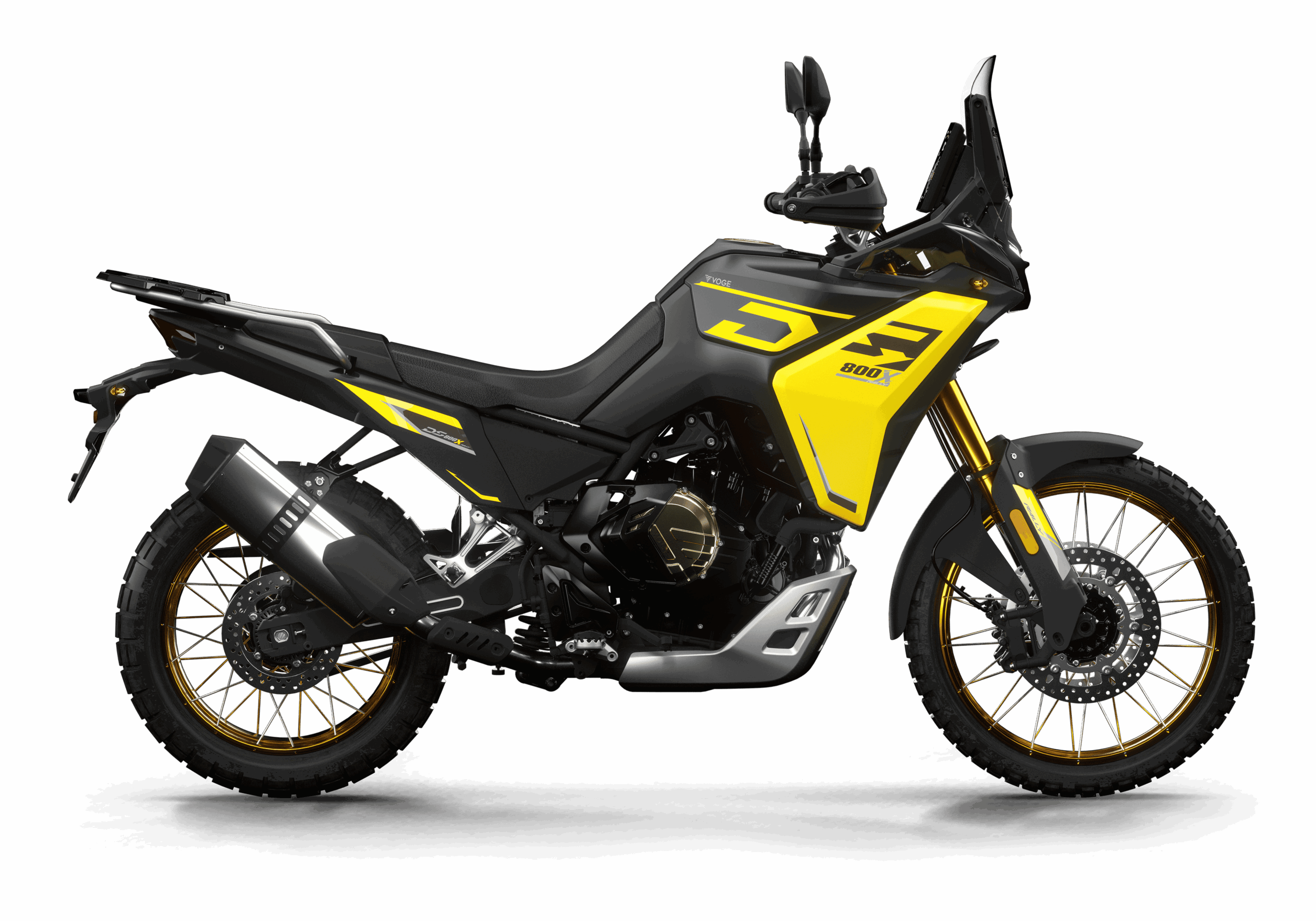
Voge belongs to Loncin, and Loncin’s relationship with BMW is older and deeper than most riders realise: the two signed their first cooperation agreement in 2005, Loncin engines started going into the BMW G650GS by 2007, and the companies marked ten years of the partnership together. Loncin currently builds the small-capacity engine in BMW’s G 310 series to BMW’s own specification — which means the company behind Voge has been held to a premium European brand’s manufacturing standard for the better part of two decades, on the same factory floor that also builds Voge’s own bikes.
That pedigree shows up in the current range. The DS800X Rally launches in Germany with a €8,999 recommended price (plus €370 delivery) for a new 798cc parallel twin making 95 hp — squarely competitive with 800-class ADVs, at a meaningful discount to most of them. Below that, the 525DSX (actually a 494cc twin) makes 35 kW — 47.6 hp — which lands it exactly on the A2 licence power ceiling, and it’s been selling in markets like Greece for €5,995. If you’re two years into an A2 and doing the same “what can I actually afford and ride legally” math I do every time a new bike shows up in my feed, that’s one of the very few adventure-styled options at that price and that power figure. Loncin’s engine business also quietly powers other brands rebuilding their name in Europe — Bultaco’s revived Rally GT 300 runs a Loncin unit under a Spanish badge, which tells you how far this one supplier’s reach actually extends.
Should you actually buy one in Europe right now
Reliability data is the honest weak point, and it’s worth stating plainly rather than waving away: French importer figures for 2024–2025 put CFMoto’s first-year workshop return rate at around 18%, against roughly 12% for the Japanese-brand average. That’s not disqualifying, but it’s not nothing either — budget for more frequent consumables (pads roughly every 8,000 km instead of 12,000, chains around 18,000 km instead of 25,000) and expect to actually use the warranty at some point rather than treating it as a formality.
The warranty terms, at least, are aggressive in the buyer’s favour: CFMoto backs its whole range with 3 years, unlimited mileage — longer than Honda, Yamaha, or KTM offer as standard. That’s the calculation each of these brands is implicitly asking you to make: slightly higher first-year fault rates, in exchange for a genuinely long warranty and a purchase price that leaves real money in your account. Dealer networks are the other variable — CFMoto and Voge both have established importers across most of Western and Central Europe now; Kove’s network is growing but thinner outside its core markets; QJMotor’s is barely a year old on the continent, which means resale value and parts availability are both still unknowns rather than known quantities.
None of this happened in a vacuum, either. Ducati’s own EUR121M state-backed R&D fund, announced with timing nobody in the Italian press believed was coincidental, is as good a sign as any that the legacy manufacturers have noticed these four brands are no longer a rounding error.
FAQ
Are Chinese motorcycles reliable in 2026?
They’re improving but not yet at Japanese-brand levels — French 2024–2025 importer data puts CFMoto’s first-year workshop return rate around 18%, versus roughly 12% for the Japanese average. Budget for more frequent consumable replacement and expect to use the warranty occasionally.
Is CFMoto still connected to KTM?
Yes for engineering, no for distribution. The two remain joint manufacturing/engineering partners — CFMoto builds engines under licence from KTM — but KTM stopped distributing CFMoto bikes in Germany, Austria, Switzerland, the UK, and Spain as of 31 May 2025, and CFMoto now runs its own European dealer network.
Which of these four brands has actually raced at the top level?
Kove, decisively. Its factory team has finished the Dakar Rally with all entered bikes, grown into the second-largest team behind KTM, and taken the first Dakar stage win by any Chinese manufacturer. It’s also confirmed a factory MXGP team for 2027.
Can I buy a QJMotor motorcycle in the EU yet?
In a limited way. The UK already sells small-displacement QJMotor models like the SRK 125 and SRV 125 through a dedicated importer, and continental Europe began receiving an initial six QJMotor models in autumn 2025 with about 20 dealers signed up, expanding toward sixteen models over time.
Are any of these bikes A2 licence-legal?
Voge’s 525DSX makes 35 kW (47.6 hp), landing exactly on the A2 power ceiling, at a starting price around €5,995. It’s currently the clearest A2-legal adventure-styled option among the four brands.
Who actually builds Voge’s engines?
Voge’s parent company, Loncin, has manufactured engines for BMW Motorrad since a 2005 agreement — including the current BMW G 310 series — to BMW’s own specification. The same manufacturing standard applies to Voge’s own range.